Cancer and its Decan Constellations.

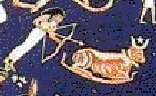
On the Denderah Zodiac below Leo’s forefeet, is a female figure holding a bow in her left hand and preparing the arrow in her right hand to be loaded for shooting. This is Argo Navis (Sextant) and may be known as Selket. In the image below as seen on the Grand Temple these two deities, the first being Jupiter and the second is Mercury, both are standing on a boat which is Argo Navis, all located between Cancer and Canis Major (in Gemini) and seen above Decan 37. 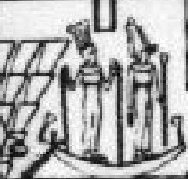
|
Note: under Scorpius, see Pharaonic SPRT (not sp3t), Selket.
Sextant (Argo Navis) - there is a constellation called Sextans, the Sextant, located below Leo, and to the right of Crater. It is a modern constellation named after the mariner’s sextant.
Argo Navis is also called Al Safinah. Suhail’ al Wazn (stars).
First seen as a serpent in ancient Egypt, and became a scorpion by the Ptolemaic period. The Scorpion was associated with the Egyptian scorpion goddess Selket, a goddess of magic, medicine and the afterlife. She was a pyschopomp, or guide of souls into afterlife. One source claims "On the Denderah stone the Sextant is shown as the maiden Selket holding a bow in her hands under the front paws of the lion. Her arrow is pointed directly over the ruminating Hathor (Sirius), through the double crown on the head of Horus (Lepus), through the white crown on the Cocky Man (Orion), and directly into the center of the sun disk on the horns of the stiff-necked Ram (Denderah Decan 27)." "Selket is the goddess of motivation."
In the "Gospel of the Stars," by Joseph Seiss, page 129, it is claimed that Argo Navis on the Denderah is a "figure of a great ox enclosed, with the cross suspended from his neck, the symbol of the great possession marked with the ancient token of immortality and eternal life, named Shes-en-Fent, rejoicing over the serpent." See the information in Canis Minor in Gemini, as to a necklace around the cow’s neck with a star or gem in its mounting.
In "The Witness of the Stars," by E.W. Bullinger, page 157-161 he reports nothing as to Argo Navis or the Sextant image on the Denderah Zodiac, as if it is being ignored.
Goddess Serket (Serqet, Selket) for a comparison to Selkh and the seven petal flower (See Bootes) is a scorpion-goddess, shown as a beautiful woman with a scorpion on her head. She is the protector of Qebhsenuef, a son of Horus.  The flower above has seven petals, and is probably an early reference to the goddess of conception, Seshat, the creative consort of Thoth. Also see Denderah Decan 2, Denderah Decan 3 and Denderah Decan 26 for more information on Sheshat.
In the three images below as seen on the Grand Temple only in this location, which are in sequence, all three have figures (Jupiter/Mercury, Canis Major/Minor, and Orion) each riding on a different boat, each boat representing Argo Navis and seen above Decan 34-37. 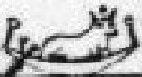 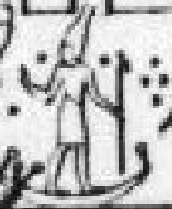
As seen on "http://home.main.rr.com/imyunnut/Den.Round.html" by Joanne Conman, "When the stars of Leo rose heliacally (before sunrise), the land of Egypt was drowned in the river. That is why the two goddesses associated with the flood, Anuket (reference to Crater) and Satet (reference to Argo Navis) are directly beneath Leo. These two goddesses together with Khnum formed the Great Triad of Elephantine. They were seen as the guardians of the Nile and were responsible for dispensing its waters in the annual Flood. Their position on the round zodiac coincides with the decan stars that rise heliacally (just before sunrise) at the time of the flood. |