From The Alpha and the Omega - Volume III
by Jim A. Cornwell, Copyright © July 20, 2002, all rights reserved
"Volume III - Scorpius and its Decan Constellations"

Scorpius and its Decan Constellations.

Scorpius

    On the Denderah Zodiac, Scorpius was originally viewed as the Serpent, but is quite clearly the image of a Scorpion, with a stinger and eight legs with two claws reaching out to grasp.
    Since Scorpius is seen as a netjeru in animal form, therefore it is definitely a pure force of nature.

    To the Coptic this is Isidis, meaning attack of the enemy.
    One source claims that the scorpion seen here is also in the style found on the kudurru, representing a symbol of the goddess Ishara.

    As seen above Scorpius on the Grand Temple is located directly above Decan 11, with Lyra the eagle or hawk following it.
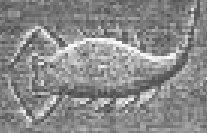
    As seen above on ESNE Plate 79 we also see a view of Scorpius.


    The hieroglyphic origin is seen as a Serpent.

    Demotic

    Scorpius Sign


    Cyril Fagan commented, "The evening rising of the constellation Scorpius occurred during the lunar month of Payni (Gemini) when the sun was in Taurus
    The Egyptians also identified this with Serpens, the serpent, the stars of which intermingled with those of the Scorpion, associated with the winds, the deadly Khamsin, hot sand storms from the Sahara and hordes of scorpions to infest the land
."

    In the season Akhet IV (Aakhet also Hiver) - Nile overflow, Inundation or "the Rising."
    The netjer of the Flood season was Hapi (the Nile).

    The month of Scorpius, as seen on Calendar Dates the month dates as:
Tropical: Sept. 17-Oct. 15,
Gregorian: Oct. 17-Nov. 15,
Julian: Oct. 31-Nov. 29,
the fourth month was named Choiach, Koiak, Khoiak, Choiak, Choiako (Kaherka), whereas the Christian coptes called it Kiahk.
    The netjer of the month was Sekhmet, at Ramesseum: Pak-t (Pachet), at Edfu: Kehek (note Coptic name Kiahk).

    The star is b Scorpius (Antares).


    On the Grand Temple as seen below these two deities are located between Sagittarius and Ursa Minor and located above Decan 13, one of them is relevant to Scorpius.
 

    The goddess Serket (Serqet, Selket) is a scorpion-goddess, shown as a beautiful woman with a scorpion on her head.    She is the protector of Qebhsenuef, a son of Horus.
    One source shows that Srkt Ii tw means "she-who-relieves-the-windpipe," as the word windpipe, may have some connection in the opposite sign of Taurus.

    On the Denderah Zodiac, Argo Navis (Sextant) is also known as Selket.


    One source claims that the Pharaonic SPRT (not seen as sp3t), represents Selket.


    First seen as a serpent in ancient Egypt, and became a scorpion by the Ptolemaic period.    The Scorpion was associated with the Egyptian scorpion goddess Selket, a goddess of magic, medicine and the afterlife.    She was a pyschopomp, or guide of souls into afterlife.


    One source claims it as the Sumerian Sippar.


    In "The Witness of the Stars," by E.W. Bullinger, page 19 "The Eagle, the Scorpion’s enemy, being substituted for the Scorpion."


Select one of the following to open it.
Each of these are connected to the constellation Scorpius,
Hercules, Ophiuchus, Serpens Cauda/Caput,
Decan 9 - GT12 Khentet-Khert (Set), Decan 10 - GT11 Khentet-hert (Heru),
Decan 11 - GT10 Tepa-Khentet (Tuamutef, Hapi), Decan 12 - GT9 Bekatha (Tuamutef, Qubhsennuf or Hapi).

    This file last updated on February 21, 2004, June 18, 2005 and May 30, 2006.
Return to the Table of Contents or the Zodiac of Denderah