From The Alpha and the Omega - Volume III
by Jim A. Cornwell, Copyright © July 20, 2002, all rights reserved
"Volume III - The Eighth Month - Constellation Names for Scorpius"
 SCORPIUS
Scorpius, the Scorpion.
The constellation name for Scorpius:
- Sumerian GÍR.TAB, also known as ziqit GÍR.TAB, "The Sting of the Scorpion," and is identified with SHAR.GAZ and SHAR.UR4 as seen in the following information. One source claims the Sumerian Gir-tab as Gir-u-tab, and by the definition below it is obvious that Sumerian gir means "knife" or "blade," even "scorpion," and the Sumerian tab, means "sting," as in what occurs when the tail of the scorpion strikes its victim.
- Sumerian gír-tab: scorpion ('knife' + 'sting').
- Sumerian gíri, gír: n., knife, dagger, sword; thorn; scorpion; lightning flash; road; expedition, trip; v., to stab; to fulgurate, lighten, flash.
- Sumerian tab: n., sting; fever; companion; pair; v., to burn; to tremble, shake; to make haste; to hold, clasp; to bind; to join (with -da-); to be/make double (sometimes reduplicated).
- In Scorpius Star names we find a J (theta) Girtab, which is a very old Sumerian word for "scorpion," (more rarely it is called Sargas (SHAR.GAZ, to be seen later), another Sumerian word).
- From www.lexiline.com, "The Scorpion (GIR.TAB), d.Ishchara, Governess of all Lands. TAB, means two, and GIR (Indo-Euro), cut, scissor, claws, as in the two claws of the Scorpion."
- In the Scorpius Star Names under J Girtab, is the mention of Ishkara which is the same as the d.Ishchara, "In the Tablet of the 30 stars, ... The God/Goddess-Ishkara-of-the-Sea."
- In "Hamlet's Mill" by Giorgio de Santillana and Hertha von Dechend, Gambit Inc. 1969 it states on page 409, "See P.F. Gossmann, Planetarium Babylonicum (1950), 94: mulGIR2.TAB dIshara tam-tim." "Anton Deimeil (Pantheon Babylonicum [1914], pp 148f.) takes mulGIR.TAB for beta delta alpha Scorpii only: 'Ishara est dea quaedam partus, quae relatationem habet ad Gestin anna, Adad'." "Egyptian Selket/Serqet, the Mesopotamian Ishara tamtim, the Scorpion goddess."
- Richard H. Allen has stated: The Akkadians called it Girtab, the Seizer, or Stinger, and the Place where One Bows Down, titles indicative of the creature's dangerous character; although some early translators of the cuneiform text rendered it the Double Sword. With later dwellers on the Euphrates it was the symbol of darkness, showing the decline of the sun's power after the autumnal equinox, then located in it. Always prominent in that astronomy, Jensen thinks that it was formed there 5,000 B.C., and pictured much as it now is; perhaps also in the semi-human form of two Scorpion-men, the early circular Altar, or Lamp, sometimes being shown grasped in the Claws, as the Scales were in illustrations of the 15th century. In Babylonia this calendar sign was identified with the eighth month, Arakh Savna, our October-November.
- Akkadian zuqaqipu, "The Scorpion," Scorpius.
- Akkadian Agrabu, "seizer-and-stinger."
- In the Scorpius Introduction we see the name for the Eighth Month of Bul presented as:
- Akkadian arahsamnu.
- Also called the month of Arachsamma.
- From www.lexiline.com,
- "On the 5th of Arachsamma, the scorpion GIR.TAB is visible, [and the Sitting Dog UR.KU]. The star of Eridu NUN.KI sets."
- "On the 15th of Arachsamma, the goat UZ and GAB.GIR.TAB are visible, and the Old One SHU.GI and the Shepherd SIPA.ZI.AN.NA begins to set. The rise of the Leopard UD.KA.DUCH.A is 30 days, and its opposite is Erua (Coma Berenices)."
- In Assyro-Babylonian Myth we find aqrabuamelu (girtablilu) - scorpion-man, the guardians of the gates of the underworld. Their "terror is awesome" and their "glance is death". They guard the passage of Shamash. They appraise Gilgamesh and speak with him.
- Another source claims: Scorpion men feature in several Babylonian and Sumerian myths, including the Enûma Elish and Gilgamesh. They are also known as aqrabuamelu or girtablilu. In the Epic of Gilgamesh, they stand guard outside the gates of the sun god Shamash at the mountains of Mashu. These give entrance to Kurnugi, the land of darkness. The scorpion men open the doors for Shamash (Sun) as he travels out each day, and close the doors after him when he returns to the underworld at night. They also warn travelers of the danger that lies beyond their post. Their heads touch the sky, their 'terror is awesome' and their 'glance is death'.
- In his work “BABYLONIAN STAR-LORE: An Illustrated Guide to the Star-lore and Constellations of Ancient Babylonia,” by Gavin White gives this image of Scorpius which is seen on page 46 shown here as
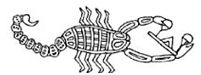 and comments, "The autumn skies are dominated by the huge figure of the Scorpion. Its array of weaponry has led it to be regarded as a creature symbolizing war and the martial prowess of the king. And its venomous nature further expresses the autumnal themes of death and descent to the underworld, which are also reflected in the attribution of the constellation's brightest star to the goddess called Lisi (See Antares starnames), whose name is used as a generic title for groups of lamenting goddesses.
Nevertheless, the scorpion's mythical nature within the stellar calendar is most clearly revealed in the Epic of Gilgamesh where the gate of the sun is guarded by a pair of scorpion-people. The gate marks the start of an underground tunnel that was traveled by the sun during the course of each night and was traversed by Gilgamesh on his way to visit the immortals who lived beyond the confines of the world. In terms of the sun's annual circuit of the stars this tunnel can naturally be thought of as symbolizing the sun's autumnal descent into the darkness of the underworld."
Notice that White has included the image of Libra in the claws of Scorpius.
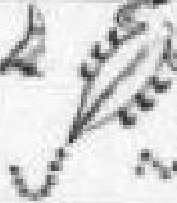
As you can see for yourself the image for Scorpius above has some correlation with the Round Denderah image  and the Square Denderah image
  and the hierogyphic image
 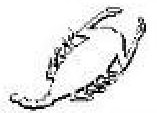 , but see the Denderah Decan information for more detail.
- Arabic/Syriac Al Akrab, "Scorpion," but also means "The Conflicts," or "War."
- Rolleston claims "Heb. Akrab, the scorpion, or the conflict (war, Psalm 91:13, 144:1)."
- War.
- Hebrew qerab ker-awb', corresponds to the Hebrew qerab, ker-awb', from Hebrew qarab, kaw-rab', a primary root to approach, bring near, thus hostile encounter, battle, war.
- Richard H. Allen states: The Arabians knew it as Al ‘Akrab, the Scorpion, from which have degenerated Alacrab, Alatrab, Alatrap, Hacrab, — Riccioli's Aakrab and Hacerab; and similarly it was the Syrians' Akreva. Riccioli gave us Acrobo Chaldaeis, which may be true, but in this Latin word he probably had reference to the astrologers.
- In "The Witness of the Stars," by E.W. Bullinger, page 54 "The Arabic name is Al Akrab, which means wounding him that cometh."
- Rolleston for unknown reason applies this to Gen. 49:6, "O my soul, come not thou into their secret; unto their assembly, mine honour, be not thou united: for in their anger they slew a man, and in their selfwill they digged down a wall."
- Hebrew 'aqrab, ak-rawb'; of uncertain derivation, a scorpion, fig. a scourge or knotted whip, scorpion.
- Akrabbim or Maalehacrabbim (Hebrew Ma'aleh 'Agrabbiym, mah-al-ay' ak-rab-beem', from Heb. ma'aleh, mah-al-eh', an elevation, and (the plural of) Heb. 'aqrab, ak-rawb'; scorpion, thus Steep of Scorpions (Scorpion's Pass), a place in the Desert, the ascent (going up) of Akrabbim. This place is found near the SW corner of the Dead Sea. It was the scene of Judas Maccabeus victory over the Edomites. It is now identified as the pass Es-Sufah.
- Rolleston also calls this in the Hebrew as Agurah.
- In Scorpius we find a star name b Acrab or Graffias is located in the head of the Scorpion as it means in Arabic named for the constellation.
- The rarer name is Graffias meaning "claws," which will be commented more in the Libra section.
- Rolleston as to Libra states "Heb. Graffias, means swept away."
- Swept.
- Hebrew garaph, gaw-raf', a primary root to bear off violently, sweep away.
- Grotius said that the Arabians called the Claws Graffias, and the Latins, according to Pliny, Forficulae.
- Egyptian/Coptic:
- Egyptian or Coptic Isidus, "Attack of the Enemy."
- Richard H. Allen comments: But the Denderah zodiac shows the typical form. Kircher called the whole constellation Isias, Static Isidis, the bright Antares having been at one time a symbol of Isis.
- In "The Witness of the Stars," by E.W. Bullinger, page 54 "The Coptic name is Isidis, which means the attack of the enemy, or oppression, referring to the wicked oppress."
- Rolleston puts this in Psalm 17:9.
- Opress.
- Hebrew shadad, shaw-dad', a primary root properly to be burly, i.e. (fig.) powerful (pass. impregnable), by implication ravage, dead, destroy (-er), opress, robber, spoil (-er), utterly, (lay) waste.
- On the Denderah Zodiac, Scorpius was originally viewed as the Serpent, but is quite clearly the image of a Scorpion, with a stinger and eight legs with two claws reaching out to grasp.
- Goddess Serket (Serqet, Selket) is a scorpion-goddess, shown as a beautiful woman with a scorpion on her head. She is the protector of Qebhsenuef, a son of Horus. On the Denderah Argo Navis (Sextant) is also known as Selket. Pharaonic SPRT (not sp3t) is Selket.
- First seen as a serpent in ancient Egypt, and became a scorpion by the Ptolemaic period. The Scorpion was associated with the Egyptian scorpion goddess Selket, a goddess of magic, medicine and the afterlife. She was a pyschopomp, or guide of souls into afterlife.
- One source claims it as the Sumerian Sippar.
- In "The Witness of the Stars," by E.W. Bullinger, page 19 "The Eagle, the Scorpion's enemy, being substituted for the Scorpion."
- Greek skorpios, skor-pee'-os, probably from an obsolete Gr. skerpo (perhaps strengthened from the base of Gr. skopos, skop-os' and meaning to pierce), a scorpion (from its sting), scorpion.
- Rolleston adds "Scorpios in the Septuagint and Vulgate, Psalm 91:13, Rev. 9:3, means cleaving in conflict."
- Cleave.
- Hebrew baqa', baw-kah', a primary root to cleave.
- Hebrew dabaq, daw-bak', a primary root properly to impinge, cleave (fast together).
- Hebrew sheça', sheh-sah, from Heb. shaça, shaw-sas, a primary root to split or tear, fig. to upbraid, cleave, (be) cloven ([footed]), rend, stay, thus a fissure, cleft, clovenfooted.
- KJV - Psalm 91:13 "Thou shalt tread upon the lion and adder the young lion and the dragon shalt thou trample under feet."
- KJV - Rev. 9:3 "... as the scorpions of the earth have power."
- Richard H. Allen comments: With the Greeks it universally was Skorpios; Aratos, singularly making but slight allusion to it, added Megatherion, the Great Beast, changed in the 1720 edition of Bayer to Melatherion; while another very appropriate term with Aratos was Teras mega, the Great Sign. This reputed magnitude perhaps was due to the mythological necessity of greater size for the slayer of great Orion.
- Latin Scorpius, the Scorpion, or Scorpio in the Septuagint and Vulgate, (battle, Job 38:23).
- Battle.
- Hebrew qerab ker-awb', corresponds to the Hebrew qerab, ker-awb', from Hebrew qarab, kaw-rab', a primary root to approach, bring near, thus hostile encounter, battle, war.
- Richard H. Allen comments: The Latins occasionally wrote the word Scorpios, but usually Scorpius, or Scorpio; while Cicero, Ennius, Manilius, and perhaps Columella gave the kindred African title Nepa, or Nepas, the first of which the Alfonsine Tables copy, as did Manilius the Greek adjective Opistho Bamon, Walking Backward. Astronomical writers and commentators, down to comparatively modem times, occasionally mentioned its two divisions under the combined title Scorpius cum Chelis (Scorpio and Libra); while some representations even showed the Scales in the creature's Claws.
- From www.louisville.edu, "The Scorpion, the ancient Mesopotamians saw this constellation as a scorpion. The Scorpion Man, Sagittarius, 'Guardian to the Gateway of the Sun' or 'Guardian to the Gateway of the Dead.' He was an archer with a human head, a scorpion's tail, the legs of a bird, and a snake-headed penis who guarded the gateway to the Sun on Mount Masu. Gilgamesh confronted this creature on his quest to find Utnapishtum. Also identified as Pabilsag, the centaur (Sumerian), the son of Enlil and Ninisina (the patron goddess of Isin)."
- Other names for Scorpius: Aa'krab, A'krab, Ala'crab, Ala'trab, Ala'trap, Cabala'trab, Ha'cerab, Ha'crab, Tali al Shau'lah (cluster).
- Richard H. Allen states on all of the following: The Arabians knew it as Al ‘Akrab, the Scorpion, from which have degenerated Alacrab, Alatrab, Alatrap, Hacrab, — Riccioli's Aakrab and Hacerab; and similarly it was the Syrians' Akreva. Riccioli gave us Acrobo Chaldaeis, which may be true, but in this Latin word he probably had reference to the astrologers.
- The Persians had a Scorpion in their Ghezhdum or Kazhdum, and the Turks, in their Koirughi, Tailed, and Uzun Koirughi, Long-tailed.
- Early India knew it as Ali, Vicrika, or Vrouchicam, — in Tamil, Vrishaman; but later on Varaha Mihira said Kaurpya, and Al Biruni, Kaurba, both from the Greek Scorpios. On the Cingalese zodiac it was Ussika.
- Dante designated it as Un Secchione.
- In early China it was an important part of the figure of the mighty but genial Azure Dragon of the East and of spring, in later days the residence of the heavenly Blue Emperor; but in the time of Confucius it was Ta Who, the Great Fire, a primeval name for its star Antares; and Shing Kung, a Divine Temple, was applied to the stars of the tail. As a member of the early zodiac it was the Hare, for which, in the 16th century, was substituted, from Jesuit teaching, Tien He, the Celestial Scorpion.
One of the twelve simple Hebrew Letters is Nun (KJV nun, Ps 119:105, Heb. nuwn, noon, a primary root, to resprout, i.e. propagate by shoots, fig. to be perpetual, be continued.), the English n which has a numerical value equal to 14, and an esoteric meaning of "Fish."
- Fish.
- Hebrew nephesh, neh'-fesh, from Heb. naphash, naw-fash', a primary root to breathe, passive, to be breathed upon, refreshed, thus properly a breathing creature, animal, vitality.
- Hebrew dag, dawg, a fish, also Heb. dagah, daw-gaw', to spawn, become numerous, grow.
See Star Names of Scorpius or return to the Introduction of Scorpius.
This file last updated on February 21, 2004, March 14, 2005, July 15, 2008, and March 30, 2010.
Return to the Table of Contents or the Zodiac of Denderah