Luna

As seen on the Denderah Zodiac below Pisces, Luna is a female figure holding up her left arm and supporting in her hand a small wild boar. The whole figure is encircled by a sun disk.
Since Luna is seen as a netjeru in human form, therefore it represents a spiritual understanding.
Coptic name for this is Pi-cochos, who circles, in the Arabic sense.
Egyptians may have called it Aah, as in connected.
Luna, Egyptian ich (iah) = the moon.
The Persians had Mah, as in Aah.
The Latin of course is Luna and Lunus, as in Lebana (Levana).
Some claim that this is Neith, sent forth, or caused to come.
|
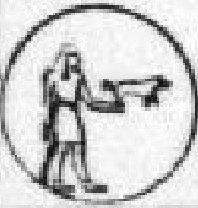
In the image above Luna can be seen on the Grand Temple located above Decan 25 holding up a boar or small animal (See Set) in her hand by its hind feet, all encircled in a sun disk.
One-source states this about Luna, "The right, or west, fish has a woman with a boar in her hand." This is the symbol for the Moon. "...the west fish of Pisces leads the way around the tribulations of self doubt and denial, for it carries the symbol of woman’s intuition, which is a boar."
|
Luna is also seen as:
One source claims that the Hebrew Lebanah, Lebana, means as above, white (white moon), the other form is Heb. Yareah, which means sent forth (as a rain moon).
The Arabic have Al Kamar the red moon, in the Arabic sense.
The Phases of the Moon: Moon, Month.
New Moon:
Hebrew chodesh, kho'-desh, from Heb. chadash, khaw-dash', a primary root, to be new; to rebuild, renew, repair, thus the new moon, by implication a month, new moon.
Sumerian é-u4-sar: new moon ('house' + 'to begin').
Crescent Moon:
Hebrew yareach, yaw-ray'-akh, from the same as Heb. yerach, yeh'-rakh, from an unused root of uncertain significance; a lunation, i.e. month, moon, thus the moon.
Hebrew lebanah, leb-aw-naw', from Heb. laban, law-ban', primary root, to be (or become) white; also (as denom. from Heb. lebenah, leb-ay-naw', a brick (from the whiteness of the clay), (altar of) brick, tile) thus to make bricks: make brick, be (made, make) white; thus properly (the) white, i.e. the moon).
Sumerian é-u4-7: first crescent moon ('house' + 'day 7').
Full Moon:
Hebrew kece', keh'-seh, or keceh, apparently from Heb. kacah, kaw-saw', prim. root to plump, fill up hollows, to cover, thus properly fullness or the full moon, i.e. its festival, (time) appointed.
Sumerian é-u4-15: full moon ('house' + 'day 15').
The Babylonians worshipped her as Mylitta, i.e. generative.
Our Monday, or Moon-day, indicates the former prevalence of the moon-worship (Isa. 65:11 "they that forsake the LORD, ... forget my holy mountain, ... prepare a table for that troop, ... furnish drink offering unto that number.").
Meni (the moon) as goddess of fortune was thought to number the fates of men. The name Number, conjures up the Hebrew Meniy, men-ee', from Heb. manah, maw-naw', to weigh out, allot, count set, tell, thus Apportioner, i.e. Fate, as an idol, number, and probably Ashtaroth or Astarte (1 Kings 11:33 "have worshipped Ashtoreth the goddess of the Zidonians, Chemosh the god of the Moabites, and Milcom the god of the children of Ammon."). Gad is probably the god of the sun.
Another source claims that this is the Egyptian SUN-Sed.
And some sources call this by the Sumerian SIN or possibly dSuen.
As seen on "http://home.main.rr.com/imyunnut/Den.Round.html" by Joanne Conman, "Behind Venus, a figure in a circle holds a pig by the tail. Daressy thought this was a pun on the name for lapis lazuli, a semi-precious blue stone that was valued highly by the Egyptians, and the Nile, which was called 'blue.' Both were sacred to the goddess Hathor. The stars of the decans under this figure rise heliacally (just before sunrise) at about the time the water of the river Nile would begin rising for the annual flood. These stars also rise acronychally (just after sunset) at the time of Innudation, so it is quite possible that there is a connection to the Nile here."
|