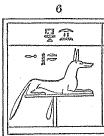
Capricornus and its Decan Constellations.
Capricornus
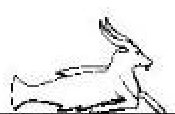
On the Denderah Zodiac and also at Esne, Capricornus is called by the Coptic Hu-penius, meaning "the place of sacrifice," or "station of bearing." It is seen with Mars standing on its back and as a scaly half-goat and half-fish image representing a change of some kind. Since Capricornus is seen as a netjeru in mixed animal form, it represents a changing force of nature.
The constellation of Cetus is seen under Pisces normally. One source claims "Cetus is shown as the back half of Capricornus. The joining of the whale and the goat are a metaphor for the union of the body and mind." |
 Capricornus as seen in the image above on the Grand Temple is located above Decan 18 . 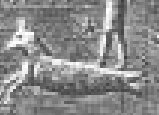 As seen above on the ESNE Plate 79, Capricornus is seen with Mars on its back. 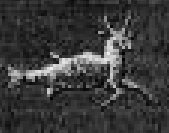 On ESNE Plate 87 in the lower section seen above, we see Capricornus alone.
Capricornus is seen by some sources as the "symbol of utility."
In "The Witness of the Stars," by E.W. Bullinger, page 75 "In the Zodiacs of Denderah and Esneh, in Egypt, it (Capricornus) is half-goat and half-fish, and it is there called Hu-penius, which means the place of the sacrifice." |

The hieroglyphic origin is seen as the Ankh, a symbol of eternal life. The gods are often seen holding an ankh to someone's lips as in offering "The Breath of Life."

Demotic

Capricornus Sign |
In the season Peret II (Pert, also Printemps) - seed time, whereas others call it Proyet, meaning "Emergence." So besides a time to sow seeds, it also is when they sent the sheep and horses to pasture.
The month of Capricornus, as seen on Calendar Dates the month dates as: The star is in Aquila as (Altair) as noted on Grand Temple Decan 17.
On the Grand Temple the figure seen below to the left located before Capricornus is Venus located above Decan 18. On the Grand Temple the deity seen below to the far right is located above Decan 19, and directly behind is Mars. 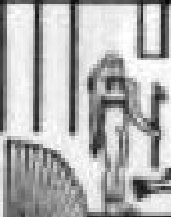 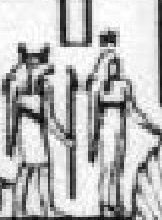 |