|
Decan 18-19

Also see Denderah Decan 19 for some common themes.
|
Decan 18 seen below the Sextant (Argo Navis) and to the rear of Canis Major is a male figure with a hawk head wearing the Double Crown (Pshent, the unified white and red crown) or combination crown of upper and lower Egypt, which also has the three stars (in an upward pointing triangle) under his left hand.
Since Decan 18 is seen as a netjeru in human form, therefore it represents a spiritual understanding.
A connection with Grand Temple Decan 3 is seen as the male hawk head with the Double Crown (Pshent, the unified white and red crown) with three stars under his left hand.
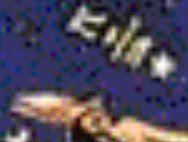
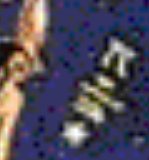
The hieroglyphs
start with either
an altar figure, Egypt. kh,
or a bird with long legs sign, unknown,
but is the same as seen on Denderah Decan 7,
which has the same image
(i.e. the bar with the two legs),
then the mouth sign, Egypt. r,
next the water sign, Egypt. n,
and the owl sign (close pin shape), Egypt. (a)m,
and then ends with a star.
Thus we have [kh-r n-(a)m].
On the Denderah Zodiac, Perseus is known as
Kar Knem, he who fights and subdues.
 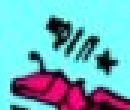 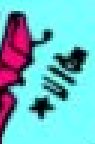
It is very close to the Grand Temple Decan 3 name of Kher khepet Ken Mout.
Horus is usually depicted as wearing the Double Crown (Pshent, the unified white and red crown) or combination of the upper and lower crown headdress with the little curly item coming from it. He is also hawk-headed and carries a spear in his left hand. Also see Denderah Decan 29 for Horus as a child.
 
Grand Temple Decan 9 and 31 is a male figure with a hawk head with scepter. The Double Crown (Pshent, the unified white and red crown) or Horus combo crown with the curly cue can also be found on Grand Temple Decan 3, 9, and 31.
As seen on Senmut's Tomb the hieroglyph for Horus Birth Child is  . .
|
Compared to Denderah Decan 18, we clearly see a major connection of the figures, in the hawk head, the crown, no scepter, and the three stars under their hand.
Grand Temple Decan 3 is a male figure with a hawk head with the oddity of no scepter. He is wearing the Double Crown (Pshent, the unified white and red crown) or Horus combo crown with the curly cue, which can also be found on Grand Temple Decan 3, 9, and 31. He also has three stars (in an upward pointing triangle) under his left hand.
Decan 3 is named by  Kher khepet Ken Mout, Kher-Khept-Kenmut, Kher khepet Ken Mout, Kher-Khept-Kenmut,
or Khery-Kheped Kenmut, which begins with
an altar figure, Egypt. kh,
then the mouth sign, Egypt. r,
next a headless fish, which is the Egypt. Khepet,
then the basket sign, Egypt. k,
then the water sign, Egypt. n,
and next the owl sign (vulture 3), Egypt. m,
next bread loaf, Egypt. t,
and ends with a star.
Thus we can see this kind of sequence as
[kh-r Khepet k-n m-t].
Kher is seen on Grand Temple Decan 3, 22, 27 and 34. Kher may mean "lower" and "under." Also see the ram god Kherty meaning the "Lower One."
Khepet is seen on the Grand Temple Decan 3 and 22. As seen on Denderah Decan 35 (Grand Temple Decan 22) for "Kher khepet seret," therefore Khery-kheped must mean "The One Who is Under the Thigh (or Buttocks)" also.
Ken Mout is also seen on Grand Temple Decan 1 and 3.
As seen on "http://home.main.rr.com/
imyunnut/Den.Round.html" by Joanne Conman, "Khery-kheped-Knumet," means "The One Who is Under the Thigh (or Buttocks) of Knumet."
As seen on "http://www.thekeep.org/
~kunoichi/kunoichi/themestream/sonsofhorus.html" by Caroline Seawright, "The four gods (Imsety, Hapy, Duamutef and Qebehsenuef) were also related to the sky, they were 'behind the Constellation of the Thigh (the Great Bear), in the northern sky.' The Children of Horus were related to the Decans (group of stars from the night sky was divided). The Decans related to them were Kher-Khept-Kenmut (Grand Temple Decan 3), Ha-tchat (Grand Temple Decan 4) and Pehui-Tchat (Grand Temple Decan 5)."
Its deity is called  Khenet Khaset ou Isis, ou les 4 fils d’Horus, also Khentet-Khast, or Isis or the Children of Horus (ou les enfants d'Horus). Khenet Khaset ou Isis, ou les 4 fils d’Horus, also Khentet-Khast, or Isis or the Children of Horus (ou les enfants d'Horus).
 Horus (Her) "the Child," "Elder," a Falcon image as seen on the Grand Temple Decan 3, 9, and 31. In adulthood known as Her-nedj-tef-ef "Horus, Avenger of His Father," and eventually defeated Set around 3000 B.C. and conquered Upper and Lower Egypt. The Elder was known as (Her-ur, Aroueris). Horus (Her) "the Child," "Elder," a Falcon image as seen on the Grand Temple Decan 3, 9, and 31. In adulthood known as Her-nedj-tef-ef "Horus, Avenger of His Father," and eventually defeated Set around 3000 B.C. and conquered Upper and Lower Egypt. The Elder was known as (Her-ur, Aroueris).
As seen on Denderah Decan 19
Associated with LEO
and possibly COMA BERENICES,
but it has stars
in Leo as [5] Denebola.
|