Sokar was an ancient falcon-god of Memphis in the 6th Dynasty in the Old Kingdom, he came to be fused with Ptah to become Ptah-Sokar and taking the lioness goddess Sekhmet as his spouse.
There are indications he was a god of craftsmanship at the outset, transformed into a funerary deity at an early stage and in the Middle Kingdom he became the triple form of Ptah-Sokar-Osiris in the Late Period as seen in Ptah. Sokar was associated with the manufacture of various objects used in embalming and in funerary rituals. He became a god of the craftsman working in the necropolis at Memphis and ultimately a patron deity of the necropolis itself.
The meaning of his name is unclear, as an anguished outcry of Wesir calling out to Aset to come and help him: "Sy-k-ri."
His titles were "He of Rosteau" or "Lord of the mysterious region of the Netherworld" puts Sokar as a funerary god of the Memphis necropolis. Rousteau, meaning the "mouth of the passage" (into the underworld) is an ancient name for Saqqara.
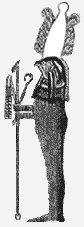
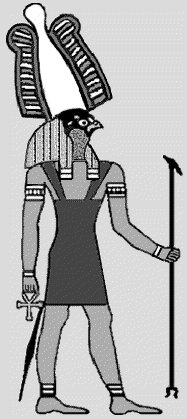
The original form of Sokar was as a falcon, and is also depicted in anthropomorphic form as a falcon-headed mummiform man wearing a conical crown adorned with the horned sundisc and cobras.
As early as the Old Kingdom, Sokar came to be regarded as a manifestation of the dead Osiris at Abydos in Upper Egypt.
His main center of worship was at Mennefer/Memphis, the yearly Festival of Sokar was celebrated in Akhet, the fourth month of spring.
He also played a prominent role at Thebes where he was depicted on the royal tombs. An important annual festival was held in his honor at Thebes. The festival celebrated the resurrection of Osiris in the form of Sokar and the continuity of the Egyptian monarchy. At this festival his image was carried in an elaborate boat known as the "henu."
I have heard some sources claim that Sokar is the Egyptian name for Capricornus as seen in other languages such as the Sumerian SUHUR.MÁSH, Akkadian suhurmashû, Babylonian SUCHUR.mash as seen on Capricornus Constellation Names.