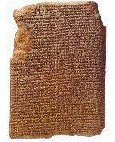
MUL.APIN Tablet 1
| Previous | Top of page | Bottom of page | Continue |
| Previous | Top of page | Bottom of page | Continue |
| Previous | Top of page | Bottom of page | Continue |
| Constellation. | Col. No. | Line No. | Textual Line | Interpretation |
|---|---|---|---|---|
| Aries | On the 1st of Nisannu the agrarian worker LU.CHUN.GA is visible. | [Perseus] I Nisannu. **This is Aries** | ||
| Aries | On the 20th of Nisannu the crooked staff GAM is visible. | [here Camelopardalis]. **I see this as Auriga** |
| Stars - Path of Enlil Column No.-Line No. Text - Interpretation |
Stars - Path of Anu Column No.-Line No. Text - Interpretation |
Stars - Path of Ea Column No.-Line No. Text - Interpretation |
|---|---|---|
**Sumerian APIN, Akkadian epinnu, "The Plow," Triangulum Boreale with g gamma (Almach or Almak) in Andromedae, Sumerian apin, plow. Sumerian (giš)apin: seeder plow (a, 'seed', + bun, 'to blow').** |
**I see this as Aries as seen below.** |
|
**Sumerian UR.BAR.RA, Akkadian barbaru, "The Wolf," although references as a Trianguli, where Lupus is "The Wolf." This is actually in the opposite sign of Libra a star of Lupus. Under Cassiopeia, the star: a Tri Mothallah or "triangle," Caput Trianguli "head of the triangle," Mothallah, Metallah, Ras al Muthallah, Elmuthalleth, a concept associated with the Zodiac of Denderah.** |
**In Cancer under Ursa Major, Dumuzi (In Egypt and Hebrew Tammuz, from Babylonian Du'uzu) was a harvest god (late summer month) of ancient Mesopotamia, Akkad, and Sumerian god of vegetation and the under-world. One source claims that Orion's name Uru-anna, "Light of Heaven," is the Akkadian god Duwu-zi (or Tammuz), same as Sumerian deity Nin-girsu, or "Lord of the Riverbank." His mother was Ningizzida (Ningishzida), an ancestor of Gilgamesh, consort of Ianna (Ishtar). Babylonian Du'uzu, is the name of a god (Dumuzi).** |
|
**Auriga is a decan in Taurus, Sumerian SHU.GI, Akkadian shibu, "The Old Man," in Perseus. Sumerian GISH.KAK dEN.ME.SHÁR.RA, "The Cart Pole of EN.ME.SHÁR.RA," probably g Persei (no name). Sumerian EN.ME.SHÁR.RA, which builds as (en, lord + me, power, divine decree + šár, totality, world + ra, nominative ending, overflow, or with šár-ra, temple) leaving the meaning possibly as "universal decrees of divine authority of the (lord) spiritual head of the temple."** |
| Previous | Top of page | Bottom of page | Continue |
| Constellation. | Col. No. | Line No. | Textual Line | Interpretation |
|---|---|---|---|---|
| Taurus | On the 1st of Ajjaru the star cluster MUL.MUL is visible. | [Pleiades, in Taurus] II Ajjaru. | ||
| Taurus | On the 20th of Ajjaru the (wooden-) tablet GISH.Le is visible. | [Taurus]. |
| Stars - Path of Enlil Column No.-Line No. Text - Interpretation |
Stars - Path of Anu Column No.-Line No. Text - Interpretation |
Stars - Path of Ea Column No.-Line No. Text - Interpretation |
|---|---|---|
**I see this as Auriga a decan in Taurus. Sumerian GÀM, Akkadian gamlu, "The Crook," one source claims that it is associated with Auriga, but it seems to fit better with Leo, and the Sumerian words for the "curved weapon."** |
**Sumerian MUL.MUL, "The Stars," (Sumerian mul, star, thus reduplicated mul.mul, stars) whereas the Akkadian zappu, "The Bristle," or the Pleiades.** |
|
**Sumerian GU4.AN.NA, "The Bull of Heaven," Taurus, seen below in Sumerian breaks down as (gu4, bull + an, heaven + na, that one, nominative).** |
| Previous | Top of page | Bottom of page | Continue |
| Constellation. | Col. No. | Line No. | Textual Line | Interpretation |
|---|---|---|---|---|
| Gemini | On the 10th of Simanu the loyal shepherd of heaven SIPA.ZI.AN.NA and the great twins MASH.TAB.BA.GAL.GAL are visible. | [Orion] [Gemini] III Simanu. |
| Stars - Path of Enlil Column No.-Line No. Text - Interpretation |
Stars - Path of Anu Column No.-Line No. Text - Interpretation |
Stars - Path of Ea Column No.-Line No. Text - Interpretation |
|---|---|---|
**Sumerian MASH.TAB.BA.GAL.GAL, Sumero-Akkadian Mastabba-gal-gal or Masu, correlates to Gemini as (maš, one-half + [(tab-ba, double + nominative) or (tab, n. pair, companion + ba, v. to give)] + gal, reduplicated great), "The Great Twins."** **"Lugal-irra and Mesiamta-ea, 'The Gate Keepers,' they stood at the gate to the underworld, their hatchets upraised, ready to dismember the dead (later identified as Castor and Pollux)."** |
**Orion is a decan of Taurus. Sumerian LI.DUR SIPA.ZI.AN.NA, "The Navel of the True Shepherd of Anu," which reads as (li, ?/ lí, true measure + dur, umbilical cord + sipa, shepherd + zi, breath, to undress + an-na, god of heaven), this does not translate well. Sumerian SIPA.ZI.AN.NA, KK, Akkadian shidallu, "The True Shepherd of Anu," Orion, which connects to the Sumerian ruler was shepherd-king Dumuzi (Biblical Tammuz) who reigned in Erech ... early in the third millennium B.C.** |
|
**This is strongly in Gemini, apparently Procyon in Canis Minor, but has close relationship to Cancer.** **Sumerian MASH.TAB.BA.TUR.TUR, "The Little Twins." In the constellation Geminorium, one source claims this to be a combination of the g (gamma) in Arabic Alhena or Al Henah, the z (zeta) star named Mekbu'da and the l (lamda) star (no name).** |
**Al Dhira'ain, is Castor-Pollux** **a-b Al Dhira' al Mabsutah', Al Dhira'ain, is Castor and Pollux combined together.**. |
|
| Previous | Top of page | Bottom of page | Continue |
| Constellation. | Col. No. | Line No. | Textual Line | Interpretation |
|---|---|---|---|---|
| Cancer | On the 5th of Du'uzu the small twins MASH.TAB.BA.TUR.TUR and the Crayfish AL.LUL are visible. | [here apparently Procyon] [Cancer] IV Du'uzu. | ||
| Cancer | On the 15th of Du'uzu the lance KAK.SI.SA , the snake MUSH and the lion UR.GU.LA are visible. | [Monoceros] [head of Hydra] [Regulus]. | ||
| Cancer | - reads together with line 42 - | . |
| Stars - Path of Enlil Column No.-Line No. Text - Interpretation |
Stars - Path of Anu Column No.-Line No. Text - Interpretation |
Stars - Path of Ea Column No.-Line No. Text - Interpretation |
|---|---|---|
**Sumerian AL.LUL, (Allul) some sources call it Allab, "The Crab"; as found in the Sumerian allalx, alla: net, seine; crab. Another source calls AL.LUL, the River Crayfish, domicile (shu-bat d. Anim) of d.Anu.** |
**Sumerian DAR.LUGAL, "The Rooster," associated with Canis Minor (?), seen below with this Sumerian group (dar, pheasant + lugal, king), thus "King Pheasant," or "Rooster."**. |
|
**I see KAK.SI.SA as the star Sirius in Canis Major in Gemini relating to Argo Navis- Puppis the BAN, which may correlate with Hydra as seen in the image to the right. I see Monoceros as in Taurus and of course Hydra in next constellation Leo** **Sumerian KAK.SI.SÁ, Akkadian Shukudu, "The Arrow," these names complies to Sagitta but are related more to the star a Sirius in Canis Maioris, this will derive as the Sumerian (kak, peg, spike, nail + si, put, place, to do + sá, advice, approach, compete), and possibly "To approach and place a peg/spike."** |
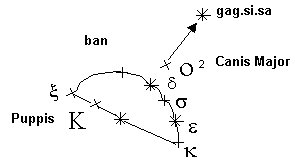 "The Mesopotamian constellation of Bow and Arrow (mulBAN and mulKAK.SI.DI, or gag.si.sa) as reconstructed on the evidence of astronomical cuneiform texts; gag.si.sa/KAK.SI.DI is Sirius, the 'Arrow Star'."** |
| Previous | Top of page | Bottom of page | Continue |
| Constellation. | Col. No. | Line No. | Textual Line | Interpretation |
|---|---|---|---|---|
| Leo | On the 5th of Abu the bow BAN and star of kings LUGAL are visible. | [Alphard] [Zosma, Chort] V Abu. | ||
| Leo | On the 10th of Ululu the star of Eridu NUN.KI and the raven UGA.MUSHEN are visible. | [False Cross] [Corvus] VI Ululu. |
| Stars - Path of Enlil Column No.-Line No. Text - Interpretation |
Stars - Path of Anu Column No.-Line No. Text - Interpretation |
Stars - Path of Ea Column No.-Line No. Text - Interpretation |
|---|---|---|
**Sumerian UR.GU.LA, "The Lion," Leo, or Ur-gula, (ur, carnivorous beast + gu-la: great).** |
**As mentioned in Gemini, Canis Major star Sirius correlates with Argo Navis to represent BAN, the bow and the arrow.** **Sumerian BAN (GISH.BAN), Akkadian Qashtu, "The Bow," which is derived from the Sumerian (ban, bow [gish, wood + ban, bow]), thus a "Bow, made from wood." This name also claims that the three stars t (tau), d (delta), s (sigma), and the star e (epsilon) the Arabic Adhara, form what is called "the virgins," in the constellation Canis Maioris seen in the Cancer section for Sirius regarding KAK.SI.DI which mentions a "BOW".** |
**As seen in Centarus the star, g Muliphain which is a name originally applied to a star in g Canis Major (which is impossible under Gemini). Muhlifan, means "star sworn by." Star name under Gemini in Canis Major is g Muliphein', "star to swear by." Both Joseph Seiss and E.W. Bullinger calls "Muliphen, (Arabic), the leader, the chief."** |
**d Zosma which means "the girdle," a misreading of its older, more appropriate, Greek name, which meant, "hip." It is actually Dhur = Zosma, a star in Leo** **J. Epping (1889) "Astronmisches Aus Babylon," provides the Babylonian and Hassan Al-Saba (Saudia Arabia) provides the Arabic source for the following 28 lunar mansion names listed as: Babylonian #15 Šarru. This is the Sumerian LUGAL, which is the Akkadian sharru, "The King."** |
** Sumerian MUSH, "The Snake," Hydra.** |
In relation to the Star names of Argo Navis, we have in the constellation a smaller one of four called, Carina, Latin meaning "The Keel."a Canopus, Latin from Greek kanopos. In "Hamlet's Mill" by Giorgio de Santillana and Hertha von Dechend, Gambit Inc. 1969, in regard to the constellation Eridanus they commented on page 211 "[W.F. ALbright exchanged 'mouth' and 'source' ...]. The 'source' is as unrevealing as the 'mouth' has been ... Eridu, Sumerian mulNUNki, is Canopus, a Carinae, the brightest star near the South Pole." |
**Sumerian UGA(.MUSHEN), Akkadian aribu, "The Raven," d star name in Arabic Algorab, raven's wing, also called Minchir al Gorab, The Raven's Piercing or Tearing To Pieces, in Corvus.** |
In the path of Ea, Column II, Line 20 mentioned under Aquarius, The Great God Ea (GU.LA d.Ea) the Star of Eridu (NUN.(KI)), d.Ea. - {Leo. GU.LA (not to be confused with GULA across the way) here is Leo whence UR.GU.LA, Regulus" and NUN.KI is the False Cross in Argo Navis (Vela and Carina).} |
| Previous | Top of page | Bottom of page | Continue |
| Constellation. | Col. No. | Line No. | Textual Line | Interpretation |
|---|---|---|---|---|
| Virgo | On the 15th of Ululu SHU.PA d. Enlil is visible. | [Arcturus]. | ||
| Virgo | On the 25th of Ululu the seed-furrow AB.SIN is visible. | [Spica]. |
| Stars - Path of Enlil Column No.-Line No. Text - Interpretation |
Stars - Path of Anu Column No.-Line No. Text - Interpretation |
Stars - Path of Ea Column No.-Line No. Text - Interpretation |
|---|---|---|
**The Erua is Akkadian form of the Sumerian A.EDIN.** **Sumerian A.EDIN, Akkadian Erua, g Comae Berenices (?) and possibly others. Its meaning is uncertain, as the Sumerian (a, the, movement towards + edin, steppe, plain, land between two long rivers [i.e. As in Garden of Eden], against or on).** |
**Sumerian AB.SÍN, "The Furrow," the star a Spica (Latin spica, ear of wheat (grain), ancient meaning "The Branch") is one of the brightest stars in the sky and the brightest in the constellation of Virgo. Sumerian ab-sín: furrow ('niche' + 'to sift'). Sumerian absin(3): (seeded) furrow (ab, 'niche', + sín, 'to sift').** |
C2-22 The wild boar (EN.TE.NA.BAR.CHUM), d.NIN.GIR.SU. - {Centaurus?}. **Sumerian EN.TE.NA.BAR.HUM, Akkadian habasiranu, Centaurus. Thus the Sumerian reads (en, lord, high priest + te, to approach, attack + na, human being, future/past tense (genative) + bar, (out)side, foreign, wild + hum, to bruise, to smash) Its meaning is uncertain, but something like this "The Lord [High Priest] Who Approaches [Attacks] and Smashes [Bruises] The Foreign [Wild] Ones."**. |
**Sumerian SHU.PA, Boötes. Sumerian šu, hand, portion, strength, to pour + (giš)pa, sprout, branch, wing. This could have many meanings,"Hand of the Branch," "Strength of the Branch," "Portion [Plowing] for the Sprouts."** |
||
**Chegalaju seems to be a transliteration of the Sumerian HÉ.GÁL-a-a, Akkadian kakkab nushi.** **Sumerian HÉ.GÁL-a-a, Akkadian kakkab nushi, "Star of Abundance," is part of Coma Berenices (?), as part of Virgo. Sumerian hé-gál: abundance ('abundance' + 'to be available'). So this Sumerian reference to a star or constellation should be called as stated "Star of (Great) Abundance," since usually: -a-a or -A-A, means as if reduplicated "The Great." Note that HÉ.GÁL-a-a, could be either a or b Comae Berenices.** |
| Previous | Top of page | Bottom of page | Continue |
| Constellation. | Col. No. | Line No. | Textual Line | Interpretation |
|---|---|---|---|---|
| Libra | On the 15th of Tashritu the scales (zibanitum) , the wolf UR.IDIM , the wild boar EN.TE.NA.BAR.CHUM and the sitting dog UR.KU are visible. | [Libra] [Lupus] [Centaurus] [Serpens Caput] VII Tashritu. | ||
| Libra | - reads together with line 2 - | . |
| Stars - Path of Enlil Column No.-Line No. Text - Interpretation |
Stars - Path of Anu Column No.-Line No. Text - Interpretation |
Stars - Path of Ea Column No.-Line No. Text - Interpretation |
|---|---|---|
**Sumerian BAL.TÉSH.A, Akkadian kakkab balti, "Star of Dignity," Corona Borealis (?), or the star name for a (Gemma or Alphecca, the gem, Arabic, the brightest, the shining). Sumerian bal; ba.al: n., hostility; enemies (cf., bala). v., to dig up; to quarry; to tear down, demolish. Sumerian téš: n., sexuality, sex; shame, modesty (te, 'to approach', + áš, 'to desire'). v., to feel ashamed, adv., together. Sumerian a, e4: n., water; watercourse, canal; seminal fluid; offspring; father.** |
**Sumerian ZI.BA.AN.NA, one source claims that Libra in the Sumerian Zib-ba an-na, means "Balance of Heaven" or "Heavenly Weighing Scales," which is somehow derived from this (zi, to divide, cut + ba, portion, nominative + an, heaven + na, that one, nominative) or possibly it could be rephrased as a "dividing/cutting of a portion of the heavens."** |
**Sumerian GÁN.ÙR(.RA) (GISH.GÁN.ÙR), "The Harrow." The Ploughing of Ursa Major, (gán, field + ùr, to drag over the ground + ra, + nominative). ** |
Draco as a constellation winds around the sky close to the north celestial pole. Around 2,700 B.C., Draco's alpha star, Thuban, in Arabic taban, "dragon" was the polestar, which is now in Ursa Minor, called Polaris. Since Draco encompasses Libra-Scorpius-Sagittarius may be the reason of the Ursa Major reference here.** |
**The star names of Libra:
|
|
**Sumerian KA5.A, Akkadian Shelebu, "The Fox," is in Ursae Maioris (?).** |
**The Babylonian #21 Nûru-šašûtu and #22 Nûru-šailtânu, may be the a-b stars in Libra.** |
|
**Some Scholars claim that the Akkadian Tul-ku, for Libra is the seventh month (lunar month of the autumn equinox, September-October) means "The Sacred (Holy) Mound" or "The Holy Altar." Sumerian reads (dul(6), mound, sanctuary + kù, sacred, holy), in lieu of tul-ku.** |
||
**Another source claims that the Sumerian UR.IDIM, "The Mad Dog," is Lupus. From www.lexiline.com, "The star to the left of the scorpion. The Wolf (UR.IDIM), d.Kusu. Sumerian UR = digger, clawer, clawed animal, Sumerian DIM = lion."** |
| Previous | Top of page | Bottom of page | Continue |
| Constellation. | Col. No. | Line No. | Textual Line | Interpretation |
|---|---|---|---|---|
| Scorpius | On the 5th of Arachsamma the scorpion GIR.TAB is visible. | [Scorpio] VIII Arachsamma. | ||
| Scorpius | On the 15th of Arachsamma the goat UZ and GAB.GIR.TAB are visible. | [Hercules] [Antares]. |
| Stars - Path of Enlil Column No.-Line No. Text - Interpretation |
Stars - Path of Anu Column No.-Line No. Text - Interpretation |
Stars - Path of Ea Column No.-Line No. Text - Interpretation |
|---|---|---|
**Sumerian Á.MUSHEN, Akkadian Erû, "The Eagle," in Aquila** **In the Tablet of the 30 stars lists this is seen as Asterism XXV (25) Kakkab Mulu-Bat / / Pa-gar, a-sig: The Asterism Man-of-Death | | The Corpse, The Fever" of the star e (Yed Posterior) and d (Yed Prior) Ophiuchi, the stars in the left hand of the figure, grasping the Serpent. Aquila is located in Capricornus.** |
**Sumerian GÍR.TAB, also known as ziqit GÍR.TAB, "The Sting of the Scorpion," and is identified with SHAR.GAZ and SHAR.UR4. One source claims the Sumerian Gir-tab as Gir-u-tab, and by the definition below it is obvious that Sumerian gir means "knife" or "blade," even "scorpion," and the Sumerian tab, means "sting," as in what occurs when the tail of the scorpion strikes its victim. Sumerian gír-tab: scorpion ('knife' + 'sting').** |
|
**Babylonian #25 Kaššudšakatar-pa. Under Serpends constellation names is a mention of J or q (theta) (Kashud) Ophiuchi, but the star also has a name of Al'ya, as the tip of the snakes tail. Ophiuchus is in Scorpius. Sumerian SHUDUN, Akkadian niru, "The Yoke," referenced as belonging to Boötes which is in Virgo** |
**Sumerian LI9.SI4, represents a Antares, Gr. against Mars, Arabic, "The Wounding," in Scorpii, the following promotes (lí9, à, or ri, against + si4, red, red-brown, reddish). d Dschubba or Dscub'ba, which is the Arabic, name that means "forehead, " referring to the place where the star lies, although it looks as if it is on the right claw.** |
|
**More likely the a star Polaris in Ursa Minor, but out of place here in Libra. Draco as a constellation winds around the sky close to the north celestial pole. Around 2,700 B.C., Draco's alpha star, Thuban, in Arabic taban, "dragon" was the polestar, which is now in Ursa Minor, called Polaris. Since Draco encompasses Libra-Scorpius-Sagittarius may be the reason of the Ursa Major reference here** |
**One source claims "Two stars on the stinger of the Scorpion: d.Sharur and d.Shargaz," as mentioned above are associated with two star names both in Scorpii. These two names and stars are seen in the following: Star name l Shaula is Arabic for "the stinger," for it is at the tip of the scorpion's tail. Star name g Lesath which is one of the two stars making the scorpion's tail. This name is a Latin corruption of the Arabic for "spot," probably refers to a foggy spot in the heavens created by the closeness of Shaula.** |
|
| Previous | Top of page | Bottom of page | Continue |
| Constellation. | Col. No. | Line No. | Textual Line | Interpretation |
|---|---|---|---|---|
| Sagittarius | On the 15th of Kislimu the Leopard UD.KA.DUCH.A the eagle TI8.MUSHEN and the fire-arrow-Sagittarius PA.BIL.SAG are visible. | [Cygnus confused with Aquarius] [Aquila] IX Kislimu. | ||
| Sagittarius | - reads together with line 5 - | . |
| Stars - Path of Enlil Column No.-Line No. Text - Interpretation |
Stars - Path of Anu Column No.-Line No. Text - Interpretation |
Stars - Path of Ea Column No.-Line No. Text - Interpretation |
|---|---|---|
**Note regarding the item C1-23 shown in the column to the left: The Sitting Gods - in the Sumerian DINGIR.TUCH.A.MESH or (Capricornus) ZA.BA4.BA4. The Standing Gods -- in the Sumerian DINGIR.GUB.BA.MESH thus representing (Cancer)** |
**Sumerian PA.BIL.SAG, Sagittarius, one source calls it Papilsak, "Winged Fire-Head." This alludes to the Sumerian (pa, 'wing' + bil, 'burn, roast' + sag, 'head'), which would mean "winged burning head," making the Archer-centaur, the eternal guardian of fire.** |
|
**Sumerian ÙZ, Akkadian Enzu, "The She-Goat," associated with Lyra. In "Hamlet's Mill" by Giorgio de Santillana and Hertha von Dechend, Gambit Inc. 1969 it states on page 261, "Thus, a Babylonian cuneiform tablet states: 'The Goat-Star' is also called the witch-star; the divine function of Tiamat it holds in its hands. The Goat-Star (mulUZA= enzu), apart from representing Venus, 'rises together with Scorpius' and has been identified with Vega."** |
||
**Serpens is associated with Scorpius** |
||
**Sumerian dLAMMA, which is associated with the star named a Vega, Arabic for "eagle," or "vulture," in Lyrae. Sumerian dlamma, lama: a female spirit of good fortune; tutelary genius (lam, 'to make grow luxuriantly', + a, nominative suffix).** |
||
**b Sheliak, which is Arabic for "harp." Other sources call this Shel'iak or Shel'yak, which means "tortoise," (lyre made from a shell). g Sulaphat or Sulafat', which is Arabic for "tortoise."** |
| Previous | Top of page | Bottom of page | Continue |
| Constellation. | Col. No. | Line No. | Textual Line | Interpretation |
|---|---|---|---|---|
| Capricornus | On the 15th of Tebetu the swallow SIM.MACH. | [Delphinus, mistakenly so named for a fish in the air, the SMON of Cicero as the stars of Delphinus] X Tebetu. | ||
| Capricornus | (shinunutum, IM.SHESH in the East) is visible. | {Added to later copies of the text} {the six}. | ||
| Capricornus | (and the lance KAK.SI.SA is visible in the evening.). | {Added to later copies of the text} [Alphard]. |
| Stars - Path of Enlil Column No.-Line No. Text - Interpretation |
Stars - Path of Anu Column No.-Line No. Text - Interpretation |
Stars - Path of Ea Column No.-Line No. Text - Interpretation |
|---|---|---|
**Sumerian UD.KA.DU8.A, "The Demon with the Gaping Mouth," Cygnus and part of Cepheus. Sumerian ud, (storm) demon + ka, mouth + du8, open, to crack open + a, the. Cygnus is in Aquarius and Cepheus is in Pisces.** |
**Sumerian SUHUR.MÁSH, (Suhur-mas, Suhu-massa, Fish-Goat) is the last lunar mansion. From www.lexiline.com it claims, "The Cargo-Boat (MA.GUR8, Ma.gurch) and the Goat-Fish (SUCHUR.MASH.KU6). Also Sumerian MA.GAR 'fisher, fishing boat and not cargo boat.' Sumerian SUCHUR.MASH.KU6 'goat-fish'." Akkadian suhurmashû, "The Goat Fish." From www.louisville.edu, "The Goat Fish is Capricornus, 'Suhurmasu, the carp-goat.' Associated with the Sumerian god Enki, Babylonian god Ea, and the Canaanite/Philistine Dagon."** |
|
**Hebrew shamem, shaw-mame', a primary root, to stun, thus desolate. In "The Witness of the Stars," by E.W. Bullinger, page 80 "The Hebrew name is Sham, destroying, or desolate." Other names for Sham: Arabic Al sahm, Al Sahm, Al Soham', "the arrow."** |
| Previous | Top of page | Bottom of page | Continue |
| Constellation. | Col. No. | Line No. | Textual Line | Interpretation |
|---|---|---|---|---|
| Aquarius | On the 5th of Shabatu the Great GU.LA the Great Square ((ASH).IKU) and the stag (LU.LIM) are visible. | [Capricorn] [Pegasus] [Cassiopeia] XI Shabatu. | ||
| Aquarius | On the 25th of Shabatu Anunitum is visible. | [Andromeda]. |
| Stars - Path of Enlil Column No.-Line No. Text - Interpretation |
Stars - Path of Anu Column No.-Line No. Text - Interpretation |
Stars - Path of Ea Column No.-Line No. Text - Interpretation |
|---|---|---|
Sumerian ANSHE.KUR.RA, Akkadian sisû, "The Horse," Pegasus. Sumerian sisi (ANŠE.KUR.RA): horse (reduplicated si, 'to stand upright'). In the Tablet of the 30 stars as the lunar asterism: Babylonian-Assyrian is called Si-su. Kakkab Ansu-kurra, "The-Animal-from-the-East." |
**Under Pegasus we find the Sumerian ASH.GÁN, Akkadian ikû, "The Field," basically the Great Square of Pegasus, consisting of a Markab, horse's shoulder, in Aquarius the b Scheat, shin, and g Algenib, the side, for Pegasi with the star a Andromedae (Alpheratz).** |
**Sumerian GU.LA, which means "Great," Aquarius.** |
**b Scheat is Arabic for "shin" and marks the northwestern corner of the Great Square or the upper leg of Pegasus, which some call "leg." I see no connection here with the Swan. This is most likely Cygnus usually associated with the Swan, the Akkadian shinunutu, "The Swallow," is the western fish of Pisces, or the circlet of stars located under Pegasus.** |
| Previous | Top of page | Bottom of page | Continue |
| Constellation. | Col. No. | Line No. | Textual Line | Interpretation |
|---|---|---|---|---|
| Pisces | On the 15th of Addaru the fish (KU6) and the old one (SHU.GI) are visible. | [Pisces] [Auriga] XII Addaru. |
| Stars - Path of Enlil Column No.-Line No. Text - Interpretation |
Stars - Path of Anu Column No.-Line No. Text - Interpretation |
Stars - Path of Ea Column No.-Line No. Text - Interpretation |
|---|---|---|
**Sumerian LU.LIM, Akkadian lulimu, "The Stag," Andromeda, Sumerian lu, man. The connection to Andromeda is not easily determined, and may even be in error.**. |
**From www.lexiline.com it claims, "The 15th of Tebetu (Capricornus) the swallow SIM.MACH (added later: shiunutum IM.SHESH in the East and the lance KAK.SI.SA), the Great Square ASH.IKU rises in 20 days, and on the opposite the standing gods DINGIR.GUB.BA.MESH. The path of the moon, the Goat-Fish SUCHUR.MASH, the Great GU.LA, the 'tail' of the Swallow SIM.MACH, the 'tail' KUN.MESH of the Swallow the 'bands' are intended and identified as the Tigris and Euphrates, 'bands' going forth from the Swallow (and Great Square), later as swallow and Anunitum were changed into two fish and the two bands of the fish." From www.louisville.edu, it claims "Anunitu equals Pisces, 'The Lady of the Heavens,' (Babylonian) Ishtar and the Canaanite Ashtoreth."** ** From www.lexiline.com, it claims "The star behind the Great Square: Anunitum appears to be the star Andromeda, daughter of Anu."** |
**Sumerian ku6, kua: fish (kú, 'food', + a, 'water'). Sumerian *ha: fish (not the usual word for fish, but the fish sign may get its syllabic reading of HA from *h 'many' + a 'water' = 'fish', an alternative to the usual ku6, kua). Babylonian Risku [Pisces] "The Cord". a Alrisha, Rischa', Alrescha, or Al Rescha' is Arabic for "the knot," or "ropes," so-called because it ties the two fish together. Sumerian KU6, Akkadian nunu, "The Fish," Piscis Austrinus, a Fomalhaut (Arabic, fish's mouth).** |
**Sumerian TIR.AN.NA, "The Rainbow," although mentioned in Gemini, it may be associated with Canis Major, in regard to the Later Persians who called Tir, "the Arrow," or a connection to the "Bow." a Alpheratz, Alpher'atz or Sir'rah both are Arabic names.** |
||
**Sumerian KA.MUSH.Ì.KÚ.E, Akkadian Pashittu, b beta (Arabic Mirachwhich, girdle) in Andromedae. Sumerian ka, mouth + mush, snake + ì, ? + kú, to eat, swallow + e, determiner, the. The meaning for this is not shown, but must have some reference to "swallowing or eating" relative to a "mouth or gate" of a "snake or serpent."** |
||
| Previous | Top of page | Bottom of page | Continue |
| Stars - Path of Enlil Column No.-Line No. Text - Interpretation |
Stars - Path of Anu Column No.-Line No. Text - Interpretation |
Stars - Path of Ea Column No.-Line No. Text - Interpretation |
|---|---|---|
This file created on November 15, 2006.