From The Alpha and the Omega - Volume III
by Jim A. Cornwell, Copyright © July 20, 2002, all rights reserved
"Volume III - M-Theory Equations, History and Concepts"
Go to the bottom of this page
M-Theory Equations, History and Concepts For Neutrino Study
This file created on March 17, 2010 as a Volume III M-Theory Equations, History and Concepts For Neutrino Study at http://www.mazzaroth.com/VolumeIII/NeutrinosAndMissingMatter.htm.
History of M-Theory, highlights from Wikipedia, the free encyclopedia
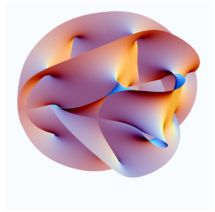
Calabi-Yau manifold (3D projection)
Introduction to M-theory
M-theory presents an idea about the basic substance of the universe.
Background
In the early 20th century, the atom was the smallest building-block of matter, until it was proven to consist of even smaller components called protons, neutrons and electrons, which are known as subatomic particles.
In the 1960s, other subatomic particles were discovered.
In the 1980s, it was discovered that protons and neutrons (and other hadrons) are themselves made up of smaller particles called quarks, and thus began Quantum theory as a set of rules that describes the interactions of these particles. During this decade a new mathematical model of theoretical physics called string theory emerged, showing how all the particles, and all of the forms of energy in the universe, could be constructed by hypothetical one-dimensional "strings," infinitely small building-blocks that have only the dimension of length, but not height or width. Further, string theory suggested that the universe is made up of multiple dimensions. We are familiar with height, width, and length as three dimensional space, and time gives a total of four observable dimensions. However, string theories supported the possibility of eleven dimensions -- the remaining 7 of which we can't detect directly. These "strings" vibrate in multiple dimensions, and depending on how they vibrate, they might be seen in 3-dimensional space as matter, light, or gravity. It is the vibration of the string which determines whether it appears to be matter or energy, and every form of matter or energy is the result of the vibration of strings. String theory then ran into a problem: another version of the equations was discovered; then another, and then another. Eventually, there were five major string theories, the main differences between each theory were principally the number of dimensions in which they developed, and the strings´ characteristics (some were open loops, some were closed loops, etc.), and all of them appeared to be correct. Scientists were not comfortable with five seemingly contradictory sets of equations to describe the same thing.
In the mid 90s, a string theorist named Edward Witten of the Institute for Advanced Study and other important researchers considered that the five different versions of string theory might be describing the same thing seen from different perspectives. They proposed a unifying theory called "M-Theory," in which the "M" may mean "membrane," help bring all of the string theories together, by asserting that strings are really 1-dimensional slices of a 2-dimensional membrane vibrating in 11-dimensional space.
Status
M-Theory is not yet complete, but the underlying structure of the mathematics has been established, and is in agreement with not only all the string theories but with all of our scientific observations of the universe. Furthermore, it has passed many tests of internal mathematical consistency that many other attempts to combine quantum mechanics and gravity had failed. Unfortunately, until we can find some way to observe higher dimensions (impossible with our current level of technology). M-Theory has a very difficult time making predictions which can be tested in a laboratory. Technologically, it may never be possible for it to be "proven." However, many cosmologists, including Stephen Hawking, are drawn to M-Theory because of its mathematical elegance and relative simplicity. Physicist and bestselling author Michio Kaku has remarked that M-Theory may present us with a "Theory of Everything" which is so concise that its underlying formula would fit on a t-shirt.
M-theory
M-theory is an extension of string theory in which 11 dimensions are identified. Because the dimensionality exceeds the dimensionality of five superstring theories in 10 dimensions, it is believed that the 11-dimensional theory unites all string theories (and supersedes them). Though a full description of the theory is not yet known, the low-entropy dynamics are known to be supergravity interacting with 2- and 5-dimensional membranes.
This idea is the unique supersymmetric theory in eleven dimensions, with its low-entropy matter content and interactions fully determined, and can be obtained as the strong coupling limit of type IIA string theory because a new dimension of space emerges as the coupling constant increases.
Drawing on the work of a number of string theorists (including Ashoke Sen, Chris Hull, Paul Townsend, Michael Duff and John Schwarz), Edward Witten of the Institute for Advanced Study suggested its existence at a conference at USC in 1995, and used M-theory to explain a number of previously observed dualities, sparking a flurry of new research in string theory called the second superstring revolution.
In the early 1990s, it was shown that the various superstring theories were related by dualities, which allow physicists to relate the description of an object in one super string theory to the description of a different object in another super string theory. These relationships imply that each of the super string theories is a different aspect of a single underlying theory, proposed by Witten, and named "M-theory," the letter M was taken from membrane, but Witten claims it can be a matter of taste for the user.
M-theory is not yet complete; however it can be applied in many situations, usually by exploiting string theoretic dualities. The theory of electromagnetism was also in such a state in the mid-19th century; there were separate theories for electricity and magnetism and, although they were known to be related, the exact relationship was not clear until James Clerk Maxwell published his equations, in his 1864 paper A Dynamical Theory of the Electromagnetic Field. Witten has suggested that a general formulation of M-theory will probably require the development of new mathematical language. However, some scientists have questioned the tangible successes of M-theory given its current incompleteness, and limited predictive power, even after so many years of intense research.
In late 2007, Bagger, Lambert and Gustavsson set off renewed interest in M-theory with the discovery of a candidate Lagrangian description of coincident M2-branes, based on a non-associative generalization of Lie Algebra, Nambu 3-algebra or Filippov 3-algebra. Practitioners hope the Bagger-Lambert-Gustavsson action (BLG action) will provide the long-sought microscopic description of M-theory.
History and development
Prior to May 1995
Prior to 1995 there were five (known) consistent superstring theories, which were given the names Type I string theory, Type IIA string theory, Type IIB string theory, heterotic SO(32) (the HO string) theory, and heterotic E8×E8 (the HE string) theory. The five theories all share essential features that relate them to the name of string theory. Each theory is fundamentally based on vibrating, one dimensional strings at approximately the length of the Planck length. Calculations have also shown that each theory requires more than the normal four spacetime dimensions (although all extra dimensions are in fact spatial.) However, when the theories are analyzed in detail, significant differences appear.
Type I string theory and others
The Type I string theory has vibrating strings that vibrate both in closed loops, so that the strings have no ends, and as open strings with two loose ends.
The open loose strings are what separate the Type I string theory from the other four string theories. This was a feature that the other string theories did not contain (The Type IIA and Type IIB string theories also contain open strings, however these strings are bound to that is to say, they are tight).
String vibrational patterns
The calculations of the String Vibrational Patterns show that the list of string vibrational patterns and the way each pattern interacts and influences others vary from one theory to another. These and other differences hindered the development of the string theory as being the theory that united quantum mechanics and general relativity successfully.
M-theory
M-theory attempts to unify the five string theories by examining certain identifications and dualities. Thus each of the five string theories becomes special cases of M-theory. As the names suggest, some of these string theories were thought to be related to each other. In the early 1990s, string theorists discovered that some relations were so strong that they could be thought of as identification.
Type IIA and Type IIB
The Type IIA string theory and the Type IIB string theory were known to be connected by T-duality; this essentially meant that the IIA string theory description of a circle of radius R is exactly the same as the IIB description of a circle of radius 1/R, where distances are measured in units of the Planck length. This was a profound result. First, this was an intrinsically quantum mechanical result; the identification did not hold in the realm of classical physics. Second, because it is possible to build up any space by gluing circles together in various ways, it would seem that any space described by the IIA string theory can also be seen as a different space described by the IIB theory. This implies that the IIA string theory can identify with the IIB string theory: any object which can be described with the IIA theory has an equivalent, although seemingly different, description in terms of the IIB theory. This suggests that the IIA string theory and the IIB string theory are really aspects of the same underlying theory.
Other dualities
There are other dualities between the other string theories. The heterotic SO(32) and the heterotic E8×E8 theories are also related by T-duality; the heterotic SO(32) description of a circle of radius R is exactly the same as the heterotic E8×E8 description of a circle of radius 1/R. This implies that there are really only three superstring theories, which might be called (for discussion) the Type I theory, the Type II theory, and the heterotic theory.
There are still more dualities, however. The Type I string theory is related to the heterotic SO(32) theory by S-duality; this means that the Type I description of weakly interacting particles can also be seen as the heterotic SO(32) description of very strongly interacting particles. This identification is somewhat more subtle, in that it identifies only extreme limits of the respective theories. String theorists have found strong evidence that the two theories are really the same, even away from the extremely strong and extremely weak limits, but they do not yet have a proof strong enough to satisfy mathematicians. However, it has become clear that the two theories are related in some fashion; they appear as different limits of a single underlying theory.
Only two string theories
Given the above commonalities there appear to be only two string theories: the heterotic string theory (which is also the type I string theory) and the type II theory. There are relations between these two theories as well, and these relations are in fact strong enough to allow them to be identified.
Last step
This last step is best explained first in a certain limit. In order to describe our world, strings must be extremely tiny objects. So when one studies string theory at low energies, it becomes difficult to see that strings are extended objects — they become effectively zero-dimensional (pointlike). Consequently, the quantum theory describing the low energy limit is a theory that describes the dynamics of these points moving in spacetime, rather than strings. Such theories are called quantum field theories. However, since string theory also describes gravitational interactions, one expects the low-energy theory to describe particles moving in gravitational backgrounds. Finally, since superstring string theories are supersymmetric, one expects to see supersymmetry appearing in the low-energy approximation. These three facts imply that the low-energy approximation to a superstring theory is a supergravity theory.
Supergravity theories
The possible supergravity theories were classified by Werner Nahm in the 1970s. In 10 dimensions, there are only two supergravity theories, which are denoted Type IIA and Type IIB. This similar denomination is not a coincidence; the Type IIA string theory has the Type IIA supergravity theory as its low-energy limit and the Type IIB string theory gives rise to Type IIB supergravity. The heterotic SO(32) and heterotic E8×E8 string theories also reduce to Type IIA and Type IIB supergravity in the low-energy limit. This suggests that there may indeed be a relation between the heterotic/Type I theories and the Type II theories.
In 1994, Edward Witten outlined the following relationship: The Type IIA supergravity (corresponding to the heterotic SO(32) and Type IIA string theories) can be obtained by dimensional reduction from the single unique eleven-dimensional supergravity theory. This means that if one studied supergravity on an eleven-dimensional spacetime that looks like the product of a ten-dimensional spacetime with another very small one-dimensional manifold, one gets the Type IIA supergravity theory. (And the Type IIB supergravity theory can be obtained by using T-duality.) However, eleven-dimensional supergravity is not consistent on its own — it does not make sense at extremely high energy, and likely requires some form of completion. It seems plausible, then, that there is some quantum theory — which Witten dubbed M-theory — in eleven-dimensions which gives rise at low energies to eleven-dimensional supergravity, and is related to ten-dimensional string theory by dimensional reduction. Dimensional reduction to a circle yields the Type IIA string theory, and dimensional reduction to a line segment yields the heterotic SO(32) string theory.
Same underlying theory
M-theory would implement the notion that all of the different string theories are different special cases.
M-theory and membranes
In the standard string theories, strings are assumed to be the single fundamental constituent of the universe. M-theory adds another fundamental constituent - membranes. Like the tenth spatial dimension, the approximate equations in the original five superstring models proved too weak to reveal membranes.
P-branes
A membrane, or brane, is a multidimensional object, usually called a P-brane, with P referring to the number of dimensions in which it exists, and can range from zero to nine, thus giving branes dimensions from zero (0-brane = point particle) to nine - five more than the world we are accustomed to inhabiting (3 spatial and 1 time).
The inclusion of p-branes does not render previous work in string theory wrong on account of not taking note of these P-branes. P-branes are much more massive ("heavier") than strings, and when all higher-dimensional P-branes are much more massive than strings, they can be ignored, as researchers had done unknowingly in the 1970s.
Strings with "loose ends"
Shortly after Witten's breakthrough in 1995, Joseph Polchinski of the University of California, Santa Barbara discovered a fairly obscure feature of string theory. He found that in certain situations the endpoints of strings (strings with "loose ends") would not be able to move with complete freedom as they were attached, or stuck within certain regions of space. Polchinski then reasoned that if the endpoints of open strings are restricted to move within some p-dimensional region of space, then that region of space must be occupied by a p-brane. These type of "sticky" branes are called Dirichlet-P-branes, or D-p-branes. His calculations showed that the newly discovered D-P-branes had exactly the right properties to be the objects that exert a tight grip on the open string endpoints, thus holding down these strings within the p-dimensional region of space they fill.
Strings with closed loops
Not all strings are confined to p-branes. Strings with closed loops, like the graviton, are completely free to move from membrane to membrane. Of the four force carrier particles, the graviton is unique in this way. Researchers speculate that this is the reason why investigation through the weak force, the strong force, and the electromagnetic force has not hinted at the possibility of extra dimensions. These force carrier particles are strings with endpoints that confine them to their p-branes. Further testing is needed in order to show that extra spatial dimensions indeed exist through experimentation with gravity.
Membrane interactions
One of the reasons M-theory is so difficult to formulate is that the numbers of different types of membranes in the various dimensions increases exponentially. For example once one gets to 3 dimensional surfaces, one has to deal with solid objects with knot-shaped holes, and then one needs the whole of knot theory just to classify them. Since M-theory is thought to operate in 11 dimensions this problem then becomes very difficult. But just like string theory, in order for the theory to satisfy causality, the theory must be local, and so the topology changing must occur at a single point. The basic orientable 2-brane interactions are easy to show, which are tori with multiple holes cut out of them.
Matrix theory
The original formulation of M-theory was in terms of a (relatively) low-energy effective field theory, called 11-dimensional Super gravity. Though this formulation provided a key link to the low-energy limits of string theories, it was recognized that a full high-energy formulation (or "UV-completion") of M-theory was needed.
Analogy with water
For an analogy, the Super gravity description is like treating water as a continuous, incompressible fluid. This is effective for describing long-distance effects such as waves and currents, but inadequate to understand short-distance/high-energy phenomena such as evaporation, for which a description of the underlying molecules is needed.
What, then, are the underlying degrees of freedom of M-theory?
BFSS model
Banks, Fischler, Shenker and Susskind (BFSS) conjectured that Matrix theory could provide the answer. They demonstrated that a theory of 9 very large matrices, evolving in time, could reproduce the Super gravity description at low energy, but take over for it as it breaks down at high energy. While the Super gravity description assumes a continuous space-time, Matrix theory predicts that, at short distances, non-commutative geometry takes over, somewhat similar to the way the continuum of water breaks down at short distances in favor of the graininess of molecules.
IKKT model
Another matrix string theory equivalent to Type IIB string theory was constructed in 1996 by N. Ishibashi, H. Kawai, Y. Kitazawa, and A. Tsuchiya.
Mysterious duality
There is a duality theory called mysterious duality relating M-theory and the geometry of del Pezzo surfaces.
Supergravity
In theoretical physics, supergravity (supergravity theory) is a field theory that combines the principles of supersymmetry and general relativity. Together, these imply that, in supergravity, the supersymmetry is a local symmetry (in contrast to non-gravitational supersymmetric theories, such as the Minimal Supersymmetric Standard Model (MSSM)).
Gravitons
Like any field theory of gravity, a supergravity theory contains a spin-2 field whose quantum is the graviton. Supersymmetry requires, the graviton field to have a superpartner. This field has spin 3/2 and its quantum is the gravitino. The number of gravitino fields is equal to the number of supersymmetries. Supergravity theories are often said to be the only consistent theories of interacting massless spin 3/2 fields.
History
Four-dimensional SUGRA
SUGRA, or SUper GRAvity, was initially proposed as a four-dimensional theory in 1976 by Daniel Z. Freedman, Peter van Nieuwenhuizen and Sergio Ferrara at Stony Brook University, but was quickly generalized to many different theories in various numbers of dimensions and greater number (N) of supersymmetry charges. Supergravity theories with N>1 are usually referred to as extended supergravity (SUEGRA). Some supergravity theories were shown to be equivalent to certain higher-dimensional supergravity theories via dimensional reduction (e.g. N = 1 11 dimensional supergravity is dimensionally reduced on S7 to N = 8 d = 4 SUGRA). The resulting theories were sometimes referred to as Kaluza-Klein theories, as Kaluza and Klein constructed, nearly a century ago, a five-dimensional gravitational theory, that when dimensionally reduced on circle, its 4-dimensional non-massive modes describe electromagnetism coupled to gravity.
mSUGRA
mSUGRA means minimal SUper GRAvity. The construction of a realistic model of particle interactions within the N = 1 supergravity framework where supersymmetry is broken by a super Higgs mechanism was carried out by Ali Chamseddine, Richard Arnowitt and Pran Nath in 1982. In these classes of models collectively now known as minimal supergravity Grand Unification Theories (mSUGRA GUT), gravity mediates the breaking of SUSY through the existence of a hidden sector. mSUGRA naturally generates the Soft SUSY breaking terms which are a consequence of the Super Higgs effect. Radiative breaking of electroweak symmetry through Renormalization Group Equations (RGEs) follows as an immediate consequence. mSUGRA is one of the most widely investigated models of particle physics due to it predictive power requiring only four input parameters and a sign, to determine the low energy Phenomenology from the scale of Grand Unification.
11d: the maximal SUGRA
One of these supergravities, the 11-dimensional theory, generated considerable excitement as the first potential candidate for the theory of everything. This excitement was built on four pillars, two of which have now been largely discredited:
- Werner Nahm showed that 11 dimensions was the largest number of dimensions consistent with a single graviton, and that a theory with more dimensions would also have particles with spins greater than 2. These problems are avoided in 12 dimensions if two of these dimensions are timelike, as has been often emphasized by Itzhak Bars.
- In 1981, Ed Witten showed that 11 was the smallest number of dimensions that was big enough to contain the gauge groups of the Standard Model, namely SU(3) for the strong interactions and SU(2) times U(1) for the electroweak interactions. Today many techniques exist to embed the standard model gauge group in supergravity in any number of dimensions. For example, in the mid and late 1980s one often used the obligatory gauge symmetry in type I and heterotic string theories. In type II string theory they could also be obtained by compactifying on certain Calabi-Yau's. Today one may also use D-branes to engineer gauge symmetries.
- In 1978, Eugene Cremmer, Bernard Julia and Joel Scherk (CJS) of the Ecole Normale Superieure found the classical action for an 11-dimensional supergravity theory. and remains today the only known classical 11-dimensional theory with local supersymmetry and no fields of spin higher than two. Other 11-dimensional theories are known that are quantum-mechanically inequivalent to the CJS theory, but classically equivalent (that is, they reduce to the CJS theory when one imposes the classical equations of motion). For example, in the mid 1980s Bernard de Wit and Hermann Nicolai found an alternate theory in D=11 Supergravity with Local SU(8) Invariance, a theory, while not manifestly Lorentz-invariant, is in many ways superior to the CJS theory in that, for example, it dimensionally-reduces to the 4-dimensional theory without recourse to the classical equations of motion.
- In 1980, Peter G. O. Freund and M. A. Rubin showed that compactification from 11 dimensions preserving all the SUSY generators could occur in two ways, leaving only 4 or 7 macroscopic dimensions (the other 7 or 4 being compact). Unfortunately, the noncompact dimensions have to form an anti de Sitter space. Today it is understood that there are many possible compactifications, but that the Freund-Rubin compactifications are invariant under all of the supersymmetry transformations that preserve the action.
Thus, the first two results appeared to establish 11 dimensions uniquely, the third result appeared to specify the theory, and the last result explained why the observed universe appears to be four-dimensional.
Many of the details of the theory were fleshed out by Peter van Nieuwenhuizen, Sergio Ferrara and Daniel Z. Freedman.
The end of the SUGRA era
The initial excitement over 11-dimensional supergravity soon waned, as various failings were discovered, and attempts to repair the model failed as well. Problems included:
- The compact manifolds which were known at the time and which contained the standard model were not compatible with super-symmetry, and could not hold quarks or leptons. One suggestion was to replace the compact dimensions with the 7-sphere, with the symmetry group SO(8), or the squashed 7-sphere, with symmetry group SO(5) times SU(2).
- Until recently, the physical neutrinos seen in the real world were believed to be massless, and appeared to be left-handed, a phenomenon referred to as the chirality of the Standard Model. It was very difficult to construct a chiral fermion from a compactification — the compactified manifold needed to have singularities, but physics near singularities did not begin to be understood until the advent of orbifold conformal field theories in the late 1980s.
- Supergravity models generically result in an unrealistically large cosmological constant in four dimensions, and that constant is difficult to remove, and so require fine-tuning. This is still a problem today.
- Quantization of the theory led to quantum field theory gauge anomalies rendering the theory inconsistent. In the intervening years physicists have learned how to cancel these anomalies.
Some of these difficulties could be avoided by moving to a 10-dimensional theory involving superstrings. However, by moving to 10 dimensions one loses the sense of uniqueness of the 11-dimensional theory.
The core breakthrough for the 10-dimensional theory, known as the first superstring revolution, was a demonstration by Michael B. Green, John H. Schwarz and David Gross that there are only three supergravity models in 10 dimensions which have gauge symmetries and in which all of the gauge and gravitational anomalies cancel. These were theories built on the groups SO(32) and  , the direct product of two copies of E8. Today we know that, using D-branes for example, gauge symmetries can be introduced in other 10-dimensional theories as well.
The second superstring revolution
Initial excitement about the 10d theories, and the string theories that provide their quantum completion, died by the end of the 1980s. There were too many Calabi-Yaus to compactify on, many more than Yau had estimated, as he admitted in December 2005 at the 23rd International Solvay Conference in Physics. None quite gave the standard model, but it seemed as though one could get close with enough effort in many distinct ways. Plus no one understood the theory beyond the regime of applicability of string perturbation theory.
There was a comparatively quiet period at the beginning of the 1990s, during which, however, several important tools were developed. For example, it became apparent that the various superstring theories were related by "string dualities,” some of which relate weak string-coupling (i.e. perturbative) physics in one model with strong string-coupling (i.e. non-perturbative) in another.
Then it all changed, in what is known as the second superstring revolution. Joseph Polchinski realized that obscure string theory objects, called D-branes, which he had discovered six years earlier, are stringy versions of the p-branes that were known in supergravity theories. The treatment of these p-branes was not restricted by string perturbation theory; in fact, thanks to supersymmetry, p-branes in supergravity were understood well beyond the limits in which string theory was understood.
Armed with this new nonperturbative tool, Edward Witten and many others were able to show that all of the perturbative string theories were descriptions of different states in a single theory which he named M-theory. Furthermore he argued that the long wavelength limit* of M-theory should be described by the 11-dimensional supergravity that had fallen out of favor with the first superstring revolution 10 years earlier, accompanied by the 2- and 5-branes. [*= i.e. when the quantum wavelength associated to objects in the theory are much larger than the size of the 11th dimension].
Historically, then, supergravity has come "full circle." It is a commonly used framework in understanding features of string theories, M-theory and their compactifications to lower spacetime dimensions.
Relation to superstrings
Particular 10-dimensional supergravity theories are considered "low energy limits" of the 10-dimensional superstring theories; more precisely, these arise as the massless, tree-level approximation of string theories. True effective field theories of string theories, rather than truncations, are rarely available. Due to string dualities, the conjectured 11-dimensional M-theory is required to have 11-dimensional supergravity as a "low energy limit." However, this doesn't necessarily mean that string theory/M-theory is the only possible UV completion of supergravity; supergravity research is useful independent of those relations.
4D N = 1 SUGRA
Before we move on to SUGRA proper, let's recapitulate some important details about general relativity:
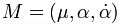
- We have a 4D differentiable manifold M with a Spin(3,1) principal bundle over it, which represents the local Lorentz symmetry.
- In addition, we have a vector bundle T over the manifold with the fiber having four real dimensions and transforming as a vector under Spin(3,1).
- We have an invertible linear map from the tangent bundle TM to T, where this map is the vierbein, and the local Lorentz symmetry has a gauge connection associated with it, the spin connection.
- The following discussion will be in superspace notation, as opposed to the component notation, which isn't manifestly covariant under SUSY. There are actually many different versions of SUGRA out there which are inequivalent in the sense that their actions and constraints upon the torsion tensor are different, but ultimately equivalent in that we can always perform a field redefinition of the supervierbeins and spin connection to get from one version to another.
In 4D N=1 SUGRA:
- We have a 4|4 real differentiable supermanifold M, i.e. we have 4 real bosonic dimensions and 4 real fermionic dimensions.
- As in the nonsupersymmetric case, we have a Spin(3,1) principal bundle over M.
- We have an R4|4 vector bundle T over M.
- The fiber of T transforms under the local Lorentz group as follows;
- The four real bosonic dimensions transform as a vector and the four real fermionic dimensions transform as a Majorana spinor.
- This Majorana spinor can be reexpressed as a complex left-handed Weyl spinor and its complex conjugate right-handed Weyl spinor (they're not independent of each other).
- We also have a spin connection as before.
We will use the following conventions;
- The spatial (both bosonic and fermionic) indices will be indicated by

- The bosonic spatial indices will be indicated by

- The left-handed Weyl spatial indices by

- The right-handed Weyl spatial indices by

- The indices for the fiber of T will follow a similar notation, except that they will be hatted like this:
 .
.
- See the van der Waerden notation for more details on that.
 .
.
- The supervierbein is denoted by
 , and the spin connection by
  .
.
- The inverse supervierbein is denoted by
 .
.
- The supervierbein and spin connection are real in the sense that they satisfy the reality conditions
 .
.
- The covariant derivative is defined as
 .
.
- The covariant exterior derivative as defined over supermanifolds needs to be super graded, which means that every time we interchange two fermionic indices, we pick up a +1 sign factor, instead of -1.
- The presence or absence of R symmetries is optional, but if R-symmetry exists, the integrand over the full superspace has to have an R-charge of 0 and the integrand over chiral superspace has to have an R-charge of 2.
- A chiral superfield X is a superfield which satisfies
 .
.
- In order for this constraint to be consistent, we require the integrability conditions that
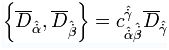 for some coefficients c.
- Unlike nonSUSY GR, the torsion has to be nonzero, at least with respect to the fermionic directions. Already, even in flat superspace,
 .
.
- In one version of SUGRA we have the following constraints upon the torsion tensor:
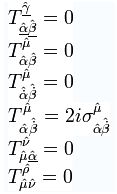
- Here,
 is a shorthand notation to mean the index runs over either the left or right Weyl spinors.
- The ,b>superdeterminant of the supervierbein,
 , gives us the volume factor for M.
 - Equivalently, we have the volume 4|4-superform
 .
.
- If we complexify the superdiffeomorphisms, there is a gauge where
 .
.
- The resulting chiral superspace has the coordinates x and
 .
.
- R is a scalar valued chiral superfield derivable from the supervielbeins and spin connection. If f is any superfield,
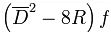 is always a chiral superfield.
- The action for a SUGRA theory with chiral superfields X, is given by
 where K is the Kähler potential and W is the superpotential, and
  is the chiral volume factor. Unlike the case for flat superspace, adding a constant to either the Kähler or superpotential is now physical. A constant shift to the Kähler potential changes the effective Planck constant, while a constant shift to the superpotential changes the effective cosmological constant. As the effective Planck constant now depends upon the value of the chiral superfield X, we need to rescale the supervierbeins (a field redefinition) to get a constant Planck constant. This is called the Einstein frame.
Theory of everything
The theory of everything (TOE) is a putative theory of theoretical physics that fully explains and links together all known physical phenomena, and, ideally, has predictive power for the outcome of any experiment that could be carried out in principle. Initially, the term was used with an ironic connotation to refer to various over generalized theories. For example, a great-grandfather of Ijon Tichy—a character from a cycle of Stanislaw Lem's science fiction stories of 1960s—was known to work on the "General Theory of Everything." Physicist John Ellis claims to have introduced the term into the technical literature in an article in Nature in 1986. Over time, the term stuck in popularizations of quantum physics to describe a theory that would unify or explain through a single model the theories of all fundamental interactions of nature.
There have been many theories of everything proposed by theoretical physicists over the last century, but none has been confirmed experimentally. The primary problem in producing a TOE is that the accepted theories of quantum mechanics and general relativity are hard to combine. It could be argued, however, that even those theories taken individually might be incomplete or not fully understood.
Based on theoretical holographic principle arguments from the 1990s, many physicists believe that 11-dimensional M-theory, which is described in many sectors by matrix string theory, in many other sectors by perturbative string theory is the complete theory of everything, although there is no widespread consensus and M-theory is not a completed theory but rather an approach for producing one.
Historical antecedents
Laplace famously suggested that a sufficiently powerful intellect could, if it knew the position and velocity of every particle at a given time, along with the laws of nature, calculate the position of any particle at any other time:
An intellect which at a certain moment would know all forces that set nature in motion, and all positions of all items of which nature is composed, if this intellect were also vast enough to submit these data to analysis, it would embrace in a single formula the movements of the greatest bodies of the universe and those of the tiniest atom; for such an intellect nothing would be uncertain and the future just like the past would be present before its eyes.
— Essai philosophique sur les probabilités, Introduction. 1814
My comment: I think he was talking about God.
Although modern quantum mechanics suggests that uncertainty is inescapable, a unifying theory governing probabilistic assignments may nevertheless exist.
Ancient Greece to Einstein
Since ancient Greek times, philosophers have speculated that the apparent diversity of appearances conceals an underlying unity, and thus that the list of forces might be short, indeed might contain only a single entry.
For example, the mechanical philosophy of the 17th century posited that all forces could be ultimately reduced to contact forces between tiny solid particles.
This was abandoned after the acceptance of Isaac Newton's long-distance force of gravity; but at the same time, Newton's work in his Principia provided the first dramatic empirical evidence for the unification of apparently distinct forces: Galileo's work on terrestrial gravity, Kepler's laws of planetary motion, and the phenomenon of tides were all quantitatively explained by a single law of universal gravitation.
In 1820, Hans Christian Ørsted discovered a connection between electricity and magnetism, triggering decades of work that culminated in James Clerk Maxwell's theory of electromagnetism.
Also during the 19th and early 20th centuries, it gradually became apparent that many common examples of forces—contact forces, elasticity, viscosity, friction, pressure—resulted from electrical interactions between the smallest particles of matter. In the late 1920s, the new quantum mechanics showed that the chemical bonds between atoms were examples of (quantum) electrical forces, justifying Dirac's boast that "the underlying physical laws necessary for the mathematical theory of a large part of physics and the whole of chemistry are thus completely known."
Attempts to unify gravity with electromagnetism date back at least to Michael Faraday's experiments of 1849–50.
After Albert Einstein's theory of gravity (general relativity) was published in 1915, the search for a unified field theory combining gravity with electromagnetism began in earnest. At the time, it seemed plausible that no other fundamental forces exist. Prominent contributors were Gunnar Nordstrom, Hermann Weyl, Arthur Eddington, Theodor Kaluza, Oskar Klein, and most notably, many attempts by Einstein and his collaborators. In his last years, Albert Einstein was intensely occupied in finding such a unifying theory. None of these attempts were successful.
New discoveries
The search for a unifying theory was interrupted by the discovery of the strong and weak nuclear forces, which could not be subsumed into either gravity or electromagnetism. A further hurdle was the acceptance that quantum mechanics had to be incorporated from the start, rather than emerging as a consequence of a deterministic unified theory, as Einstein had hoped. Gravity and electromagnetism could always peacefully coexist as entries in a list of Newtonian forces, but for many years it seemed that gravity could not even be incorporated into the quantum framework, let alone unified with the other fundamental forces.
For this reason, work on unification for much of the twentieth century, focused on understanding the three "quantum" forces: electromagnetism and the weak and strong forces.
The first two were unified in 1967–68 by Sheldon Glashow, Steven Weinberg, and Abdus Salam as the "electroweak" force. However, while the strong and electroweak forces peacefully coexist in the Standard Model of particle physics, they remain distinct. Several Grand Unified Theories (GUTs) have been proposed to unify them. Although the simplest GUTs have been experimentally ruled out, the general idea, especially when linked with supersymmetry, remains strongly favored by the theoretical physics community.
Modern physics
In current mainstream physics, a Theory of Everything would unify all the fundamental interactions of nature, which are usually considered to be four in number: gravity, the strong nuclear force, the weak nuclear force, and the electromagnetic force. Because the weak force can transform elementary particles from one kind into another, the TOE should yield a deep understanding of the various different kinds of particles as well as the different forces.
The expected pattern of theories is:
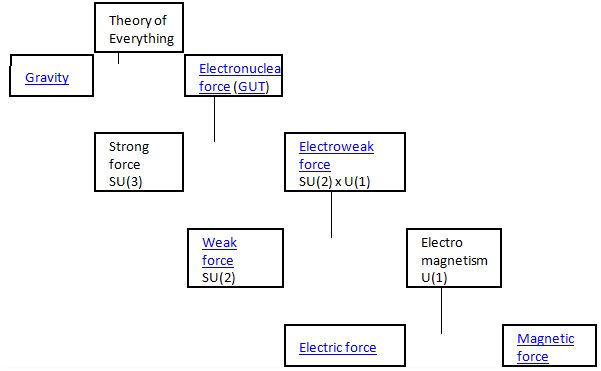
In addition to the forces listed here, modern cosmology might require an inflationary force, dark energy, and also dark matter composed of fundamental particles outside the scheme of the standard model. The existence of these has not been proven and there are alternative theories such as modified Newtonian dynamics.
Electroweak unification is a broken symmetry: the electromagnetic and weak forces appear distinct at low energies because the particles carrying the weak force, the W and Z bosons, have a mass of about 100 GeV, whereas the photon, which carries the electromagnetic force, is massless. At higher energies Ws and Zs can be created easily and the unified nature of the force becomes apparent. Grand unification is expected to work in a similar way, but at energies of the order of 1016 GeV, far greater than could be reached by any possible Earth-based particle accelerator. By analogy, unification of the GUT force with gravity is expected at the Planck energy, roughly 1019 GeV.
It may seem premature to be searching for a TOE when there is as yet no direct evidence for an electronuclear force, and while in any case there are many different proposed GUTs. In fact the name deliberately suggests the hubris involved. Nevertheless, most physicists believe this unification is possible, partly due to the past history of convergence towards a single theory. Supersymmetric GUTs seem plausible not only for their theoretical "beauty", but because they naturally produce large quantities of dark matter, and the inflationary force may be related to GUT physics (although it does not seem to form an inevitable part of the theory). And yet GUTs are clearly not the final answer. Both the current standard model and proposed GUTs are quantum field theories which require the problematic technique of renormalization to yield sensible answers. This is usually regarded as a sign that these are only effective field theories, omitting crucial phenomena relevant only at very high energies.
Furthermore, the inconsistency between quantum mechanics and general relativity implies that one or both of these must be replaced by a theory incorporating quantum gravity.
Unsolved problems in physics
Is string theory, superstring theory, or M-theory, or some other variant on this theme, a step on the road to a "theory of everything," or just a blind alley?
The mainstream theory of everything at the moment is superstring theory / M-theory; current research on loop quantum gravity may eventually play a fundamental role in a TOE, but that is not its primary aim. These theories attempt to deal with the renormalization problem by setting up some lower bound on the length scales possible. String theories and supergravity (both believed to be limiting cases of the yet-to-be-defined M-theory) suppose that the universe actually has more dimensions than the easily observed three of space and one of time. The motivation behind this approach began with the Kaluza-Klein theory in which it was noted that applying general relativity to a five dimensional universe (with the usual four dimensions plus one small curled-up dimension) yields the equivalent of the usual general relativity in four dimensions together with Maxwell's equations (electromagnetism, also in four dimensions). This has led to efforts to work with theories with large number of dimensions in the hopes that this would produce equations that are similar to known laws of physics. The notion of extra dimensions also helps to resolve the hierarchy problem, which is the question of why gravity is so much weaker than any other force. The common answer involves gravity leaking into the extra dimensions in ways that the other forces do not.
(My comment): The above comment which is what spurred me to believe that neutrinos who are very undetectible may be moving in and out of the extra dimensions, and created from nuclear forces may react with particles in these other dimensions, which in turn create the graviton which gives a mass in motion its gravitational influence. When this mass ceases its motion the gravitons move back into the other dimension and react with
neutrinos, which move back to our detectable universe with some slight interactions.(End comment)
In the late 1990s, it was noted that one problem with several of the candidates for theories of everything (but particularly string theory) was that they did not constrain the characteristics of the predicted universe. For example, many theories of quantum gravity can create universes with arbitrary numbers of dimensions or with arbitrary cosmological constants. Even the "standard" ten-dimensional string theory allows the "curled up" dimensions to be compactified in an enormous number of different ways (one estimate is 10500) each of which corresponds to a different collection of fundamental particles and low-energy forces.
This array of theories is known as the string theory landscape.
A speculative solution is that many or all of these possibilities are realized in one or another of a huge number of universes, but that only a small number of them are habitable, and hence the fundamental constants of the universe are ultimately the result of the anthropic principle rather than a consequence of the theory of everything. This anthropic approach is often criticized in that, because the theory is flexible enough to encompass almost any observation, it cannot make useful (as in original, falsifiable, and verifiable) predictions. In this view, string theory would be considered a pseudoscience, where an unfalsifiable theory is constantly adapted to fit the experimental results.
With reference to Godel's incompleteness theorem
A small number of scientists claim that Godel's incompleteness theorem proves that any attempt to construct a TOE is bound to fail. Godel's theorem, informally stated, asserts that any sufficiently complex axiomatical system for a mathematical theory is either inconsistent (both a statement and its denial can be derived from its axioms) or incomplete (a statement which is trivially true can't be derived from its axioms). In his 1966 book The Relevance of Physics, Stanley Jaki pointed out that, because any "theory of everything" will certainly be a consistent non-trivial mathematical theory, it must be incomplete. He claims that this dooms searches for a deterministic theory of everything.
Freeman Dyson has stated that
“Godel’s theorem implies that pure mathematics is inexhaustible. No matter how many problems we solve, there will always be other problems that cannot be solved within the existing rules. [...] Because of Godel's theorem, physics is inexhaustible too. The laws of physics are a finite set of rules, and include the rules for doing mathematics, so that Godel's theorem applies to them."
—NYRB, May 13, 2004
Stephen Hawking was originally a believer in the Theory of Everything but, after considering Godel's Theorem, concluded that one was not obtainable.
“Some people will be very disappointed if there is not an ultimate theory, that can be formulated as a finite number of principles. I used to belong to that camp, but I have changed my mind.”
—Godel and the end of physics, July 20, 2002
This view has been argued against by Jürgen Schmidhuber (1997), who pointed out that Godel's theorems are irrelevant even for computable physics. In 2000, Schmidhuber explicitly constructed limit-computable, deterministic universes whose pseudo-randomness based on undecidable, Godel-like halting problems is extremely hard to detect but does not at all prevent formal TOEs describable by very few bits of information.
Related critique was offered by Solomon Feferman, among others. Douglas S. Robertson offers Conway's game of life as an example: The underlying rules are simple and complete, but there are formally undecidable questions about the game's behaviors. Analogously, it may (or may not) be possible to completely state the underlying rules of physics with a finite number of well-defined laws, but there is little doubt that there are questions about the behavior of physical systems which are formally undecidable on the basis of those underlying laws.
Since most physicists would consider the statement of the underlying rules to suffice as the definition of a "theory of everything," these researchers argue that Godel's Theorem does not mean that a TOE cannot exist. On the other hand, the physicists invoking Godel's Theorem appear, at least in some cases, to be referring not to the underlying rules, but to the understandability of the behavior of all physical systems, as when Hawking mentions arranging blocks into rectangles, turning the computation of prime numbers into a physical question. This definitional discrepancy may explain some of the disagreement among researchers.
Another approach to working with the limits of logic implied by Godel's incompleteness theorems is to abandon the attempt to model reality using a formal system altogether. Process Physics is a notable example of a candidate TOE that takes this approach, where reality is modeled using self-organizing (purely semantic) information.
Potential status of a theory of everything
No physical theory to date is believed to be precisely accurate. Instead, physics has proceeded by a series of "successive approximations" allowing more and more accurate predictions over a wider and wider range of phenomena. Some physicists believe that it is therefore a mistake to confuse theoretical models with the true nature of reality, and hold that the series of approximations will never terminate in the "truth." Einstein himself expressed this view on occasions. On this view, we may reasonably hope for a theory of everything which self-consistently incorporates all currently known forces, but should not expect it to be the final answer. On the other hand it is often claimed that, despite the apparently ever-increasing complexity of the mathematics of each new theory, in a deep sense associated with their underlying gauge symmetry and the number of fundamental physical constants, the theories are becoming simpler. If so, the process of simplification cannot continue indefinitely.
There is a philosophical debate within the physics community as to whether a theory of everything deserves to be called the fundamental law of the universe.
One view is the hard reductionist position that the TOE is the fundamental law and that all other theories that apply within the universe are a consequence of the TOE. Another view is that emergent laws (called "free floating laws" by Steven Weinberg), which govern the behavior of complex systems, should be seen as equally fundamental.
Examples are the second law of thermodynamics and the theory of natural selection. The point being that, although in our universe these laws describe systems whose behavior could ("in principle") be predicted from a TOE, they would also hold in universes with different low-level laws, subject only to some very general conditions. Therefore it is of no help, even in principle, to invoke low-level laws when discussing the behavior of complex systems. Some argue that this attitude would violate Occam's Razor if a completely valid TOE were formulated. It is not clear that there is any point at issue in these debates (e.g., between Steven Weinberg and Philip Anderson) other than the right to apply the high-status word "fundamental" to their respective subjects of interest.
Although the name "theory of everything" suggests the determinism of Laplace's quote, this gives a very misleading impression. Determinism is frustrated by the probabilistic nature of quantum mechanical predictions, by the extreme sensitivity to initial conditions that leads to mathematical chaos, and by the extreme mathematical difficulty of applying the theory. Thus, although the current standard model of particle physics "in principle" predicts all known non-gravitational phenomena, in practice only a few quantitative results have been derived from the full theory (e.g., the masses of some of the simplest hadrons), and these results (especially the particle masses which are most relevant for low-energy physics) are less accurate than existing experimental measurements. The true TOE would almost certainly be even harder to apply. The main motive for seeking a TOE, apart from the pure intellectual satisfaction of completing a centuries-long quest, is that all prior successful unifications have predicted new phenomena, some of which (e.g., electrical generators) have proved of great practical importance. As in other cases of theory reduction, the TOE would also allow us to confidently define the domain of validity and residual error of low-energy approximations to the full theory which could be used for practical calculations.
Some of the biggest problems facing current TOE attempts are related to Einstein's theories of relativity. None of the current attempted TOEs give a structure of matter that gives rise to the special relativity corrections to mass, length and time when a particle moves. Those corrections are just imposed as if it is some unknown property of space. Also Einstein introduced an approximation when he derived his gravitational field equations in his general theory of relativity. Trying to match a theory to an approximation is always going to be difficult. It is believed that success will be easier when those two factors are taken into consideration.
Theory of everything and philosophy
Status of a physical TOE is open to philosophical debate. For example, if physicalism is true, a physical TOE will coincide with a philosophical theory of everything.
Some philosophers (Aristotle, Plato, Hegel, Whitehead, et al.) have attempted to construct all-encompassing systems. Others are highly dubious about the very possibility of such an exercise. Stephen Hawking wrote in A Brief History of Time that even if we had a TOE, it would necessarily be a set of equations. He wrote, “What is it that breathes fire into the equations and makes a universe for them to describe?” Of course, the ultimate irreducible brute fact would then be "why those equations?" One possible solution to the last question might be to adopt the point of view of ultimate ensemble, or modal realism, and say that those equations are not unique.
Superstring theory with Equations
Superstring theory is an attempt to explain all of the particles and fundamental forces of nature in one theory by modeling them as vibrations of tiny supersymmetric strings. Superstring theory is shorthand for supersymmetric string theory because unlike bosonic string theory, it is the version of string theory that incorporates fermions and supersymmetry. Here, the word "super" has the meaning of super-symmetry.
Background
The deepest problem in theoretical physics is harmonizing the theory of general relativity, which describes gravitation and applies to large-scale structures (stars, galaxies, super clusters), with quantum mechanics, which describes the other three fundamental forces acting on the atomic scale.
The development of a quantum field theory of a force invariably results in infinite probabilities. Physicists have developed mathematical techniques (renormalization) to eliminate these infinities which work for three of the four fundamental forces – electromagnetic, strong nuclear and weak nuclear forces - but not for gravity. The development of a quantum theory of gravity must therefore come about by different means than those used for the other forces.
Basic idea
The basic idea is that the fundamental constituents of reality are strings of the Planck length (about 10-33 cm) which vibrate at resonant frequencies. Every string in theory has a unique resonance, or harmonic. Different harmonics determine different fundamental forces. The tension in a string is on the order of the Planck force (1044 newtons). The graviton (the proposed messenger particle of the gravitational force), for example, is predicted by the theory to be a string with wave amplitude zero. Another key insight provided by the theory is that no measurable differences can be detected between strings that wrap around dimensions smaller than themselves and those that move along larger dimensions (i.e., effects in a dimension of size R equal those whose size is 1/R). Singularities are avoided because the observed consequences of "Big Crunches" never reach zero size. In fact, should the universe begin a "big crunch" sort of process, string theory dictates that the universe could never be smaller than the size of a string, at which point it would actually begin expanding.
Extra dimensions
Why does consistency require 10 dimensions?
Our physical space is observed to have only three large dimensions and—taken together with duration as the fourth dimension—a physical theory must take this into account. However, nothing prevents a theory from including more than 4 dimensions. In the case of string theory, consistency requires spacetime to have 10 (3+1+6) dimensions. The conflict between observation and theory is resolved by making the unobserved dimensions compactified.
Our minds have difficulty visualizing higher dimensions because we can only move in three spatial dimensions. One way of dealing with this limitation is not to try to visualize higher dimensions at all, but just to think of them as extra numbers in the equations that describe the way the world works. This opens the question of whether these 'extra numbers' can be investigated directly in any experiment (which must show different results in 1, 2, or 2+1 dimensions to a human scientist). This, in turn, raises the question of whether models that rely on such abstract modeling (and potentially impossibly huge experimental apparatus) can be considered scientific. Six-dimensional Calabi-Yau shapes can account for the additional dimensions required by superstring theory. The theory states that every point in space is in fact a very small manifold where each extra dimension has a size on the order of the Planck length.
Superstring theory is not the first theory to propose extra spatial dimensions; the Kaluza-Klein theory had done so previously. Modern string theory relies on the mathematics of folds, knots, and topology, which were largely developed after Kaluza and Klein, and has made physical theories relying on extra dimensions much more credible.
Number of superstring theories
Theoretical physicists were troubled by the existence of five separate string theories. A possible solution for this dilemma was suggested at the beginning of what is called the second superstring revolution in the 1990s, which suggests that the five string theories might be different limits of a single underlying theory, called M-theory.
However, unfortunately, to this date this remains a conjecture.
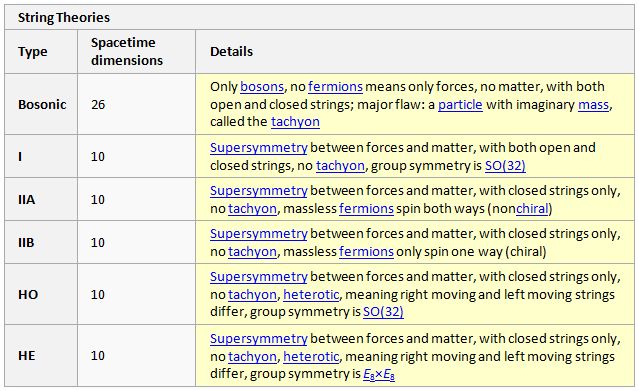
The five consistent superstring theories are:
- The type I string has one supersymmetry in the ten-dimensional sense (16 supercharges). This theory is special in the sense that it is based on unoriented open and closed strings, while the rest are based on oriented closed strings.
- The type II string theories have two supersymmetries in the ten-dimensional sense (32 supercharges). There are actually two kinds of type II strings called type IIA and type IIB. They differ mainly in the fact that the IIA theory is non-chiral (parity conserving) while the IIB theory is chiral (parity violating).
- The heterotic string theories are based on a peculiar hybrid of a type I superstring and a bosonic string. There are two kinds of heterotic strings differing in their ten-dimensional gauge groups: the heterotic E8×E8 string and the heterotic SO(32) string. (The name heterotic SO(32) is slightly inaccurate since among the SO(32) Lie groups, string theory singles out a quotient Spin(32)/Z.2 that is not equivalent to SO(32).)
Chiral gauge theories can be inconsistent due to anomalies. This happens when certain one-loop Feynman diagrams cause a quantum mechanical breakdown of the gauge symmetry. The anomalies were canceled out via the Green-Schwarz mechanism.
Please note that the number of superstring theories given above is only a high-level classification; the actual number of mathematically distinct theories which are compatible with observation and would therefore have to be examined to find the one that correctly describes nature is currently believed to be at least 10500 (a one with five hundred zeroes). This has given rise to the concern that superstring theories, despite the alluring simplicity of their basic principles, are, in fact, not simple at all, and according to the principle of Occam's razor perhaps alternative physical theories going beyond the Standard Model should be explored. This is aggravated by the fact that it is exceedingly hard to make predictions from any superstring theory which can be falsified by experiment, and in fact no current superstring theory makes any falsifiable prediction.
Integrating general relativity and quantum mechanics
General relativity typically deals with situations involving large mass objects in fairly large regions of spacetime whereas quantum mechanics is generally reserved for scenarios at the atomic scale. The two are very rarely used together, and the most common case in which they are combined is in the study of black holes. Having "peak density," or the maximum amount of matter possible in a space, and very small area, the two must be used in synchrony in order to predict conditions in such places; yet, when used together, the equations fall apart, spitting out impossible answers, such as imaginary distances and less than one dimension.
The major problem with their congruence is that, at Planck scale lengths, general relativity predicts a smooth, flowing surface, while quantum mechanics predicts a random, warped surface, neither of which are anywhere near compatible. Superstring theory resolves this issue, replacing the classical idea of point particles with loops. These loops have an average diameter of the Planck length, with extremely small variances, which completely ignores the quantum mechanical predictions of Planck-scale length dimensional warping.
The Five Superstring Interactions
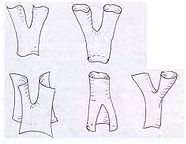
There are five ways open and closed strings can interact. An interaction in superstring theory is a topology changing event. Since superstring theory has to be a local theory to obey causality the topology change must only occur at a single point. If C represents a closed string and O an open string, then the five interactions are OOO, CCC, OOOO, CO and COO.
All open superstring theories also contain closed superstrings since closed superstrings can be seen from the fifth interaction, and they are unavoidable. Although all these interactions are possible, in practice the most used superstring model is the closed heterotic E8xE8 superstring which only has closed strings and so only the second interaction (CCC) is needed.
The mathematics
The single most important equation in (first quantisized bosonic) string theory is the N-point scattering amplitude. This treats the incoming and outgoing strings as points, which in string theory are tachyons, with momentum ki which connect to a string world surface at the surface points zi. It is given by the following functional integral which integrates (sums) over all possible embeddings of this 2D surface in 26 dimensions.

The functional integral can be done because it is a Gaussian to become:

This is integrated over the various points zi. Special care must be taken because two parts of this complex region may represent the same point on the 2D surface and you don't want to integrate over them twice. Also you need to make sure you are not integrating multiple times over different parameterizations of the surface.
When this is taken into account it can be used to calculate the 4-point scattering amplitude (the 3-point amplitude is simply a delta function):

Which is a beta function, which was apparently found before full string theory was developed. With superstrings the equations contain not only the 10D space-time coordinates X but also the Grassman coordinates. Since there are various ways this can be done this leads to different string theories.
When integrating over surfaces such as the torus, we end up with equations in terms of theta functions and elliptic functions such as the Dedekind eta function. This is smooth everywhere, which it has to be to make physical sense, only when raised to the 24th power. This is the origin of needing 26 dimensions of space-time for bosonic string theory. The extra two dimensions arise as degrees of freedom of the string surface.
D-Branes
D-Branes are membrane-like objects in 10D string theory, thought of as occurring as a result of a Kaluza-Klein compactification of 11D M-Theory which contains membranes.
Because compactification of a geometric theory produces extra vector fields the D-branes can be included in the action by adding an extra U(1) vector field to the string action.

In type I open string theory; the ends of open strings are always attached to D-brane surfaces. A string theory with more gauge fields such as SU(2) gauge fields would then correspond to the compactification of some higher dimensional theory above 11 dimensions which is not thought to be possible to date.
Why Five Superstring Theories?
For a 10 dimensional supersymmetric theory we are allowed a 32-component Majorana spinor. This can be decomposed into a pair of 16-component Majorana-Weyl (chiral) spinors. There are then various ways to construct an invariant depending on whether these two spinors have the same or opposite chiralities:
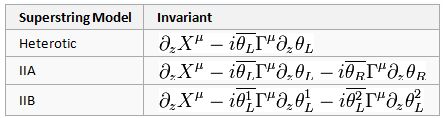
The heterotic superstrings come in two types, SO(32) and E8xE8 as indicated above and the type I superstrings include open strings.
Beyond Superstring Theory
The 5 superstring theories are approximated to a theory in higher dimensions possibly involving membranes. Unfortunately because the action for this involves quartic terms and higher so is not Gaussian the functional integrals are very difficult to solve and so this has confounded the top theoretical physicists. It may turn out that there exist membrane models or other non-membrane models in higher dimensions which may become acceptable when new unknown symmetries of nature are found, such as noncommutative geometry for example. It is thought, however, that 16 is probably the maximum since O(16) is a maximal subgroup of E8 the largest exceptional lie group and also is more than large enough to contain the Standard Model. Quartic integrals of the non-functional kind are easier to solve so there is hope for the future. This is the series solution which is always convergent when a is non-zero and negative:

In the case of membranes the series would correspond to sums of various membrane interactions that are not seen in string theory.
Compactification
Investigating theories of higher dimensions often involves looking at the 10 dimensional superstring theory and interpreting some of the more obscure results in terms of compactified dimensions. For example D-branes are seen as compactified membranes from 11D M-Theory. Theories of higher dimensions such as 12D F-theory and beyond will produce other effects such as gauge terms higher than U-1. The components of the extra vector fields (A) in the D-brane actions can be thought of as extra coordinates (X) in disguise. However, the known symmetries including supersymmetry currently restrict the spinors to have 32-components which limits the number of dimensions to 11 (or 12 if you include two time dimensions.) Some commentators (e.g. John Baez et al.) have speculated that the exceptional lie groups E6, E7 and E8, having maximum orthogonal subgroups O(10), O(12) and O(16) may be related to theories in 10, 12 and 16 dimensions; 10 dimensions corresponding to string theory and the 12 and 16 dimensional theories being yet undiscovered but would be theories based on 3-branes and 7-branes respectively. However this is a minority view within the string community. Since E7 is some sense F4 quaternified and E8 is F4 octonified, then the 12 and 16 dimensional theories, if they did exist, may involve the noncommutative geometry based on the quaternions and octonions respectively. From the above discussion it can be seen that physicists have many ideas for to extend superstring theory beyond the current 10 dimensional theory but so far none have been successful.
Kac-Moody algebras
Since strings can have an infinite number of modes, the symmetry used to describe string theory is based on infinite dimensional Lie algebras. Some Kac-Moody algebras that have been considered as symmetries for M-Theory have been E10 and E11 and their supersymmetric extensions.
Released March 17, 2010.
Go to the top of this page
To return to Volume III - site for Neutrinos And Missing Matter or Volume III - String Theory Equations, History and Concepts
or the Volume III - New Released Files.
Return to the Table of Contents or the Zodiac of Denderah