From The Alpha and the Omega - Volume III
by Jim A. Cornwell, Copyright © July 20, 2002, all rights reserved
"Volume III - The Seventh Month - Constellation Names for Lupus"
In the Seventh Month of Libra
Lupus, the Wolf, Victim or a Beast of some sort.
The constellation name for Lupus:
- Sumerian UR.BAR.RA, Akkadian barbaru, "The Wolf," although references as a Trianguli, where Lupus is "The Wolf."
Basically seen as (ur: carnivorous beast + bar-ra: outside, foreign + nominative), thus a "beast from the outside or wild," or "wild beast."
- Sumerian ur: n., dog; carnivorous beast; servant; young man, warrior; enemy; v., to tremble; adj., humble.
- Sumerian ur(2,3,4): to surround; to flood; to drag (over the ground) (often with -ni-); to shear (reduplication class) (cf., gur10).
- Sumerian úr: floor; base; lap, loins; thighs, legs; root; trunk of a tree.
- Sumerian ùr: roof; entrance; mountain pass; beam, rafter (cf., ur(2,3,4)).
- Sumerian ur4: (cf., gur10,14).
- Sumerian ur5: (cf., har).
- Sumerian ur-bi: by itself ('dog' ? + 'its; and').
- Sumerian ur-gir15[KU]: dog ('beast' + 'noble' ?).
- Sumerian ur-bi...gu7: gather together to finish off ('dogs' + 'its' + 'to eat').
- Sumerian ur-mah: lion ('carnivorous beast' + 'mighty').
- Sumerian ur-sa: hero, warrior ('young man' + 'first, in front').
- One source claims that the Sumerian UR, is also called the spiked Club-sign.
- Sumerian bar: n., (out)side; soul, innards; fleece. v., to open; to uncover, expose; to see; to remove; to release; to peel, pare, shell; to select; to divide; to split; to distribute; to keep away (with -ta-). adj., foreign. prep., because of.
- Sumerian bár: (cf., barag).
- Sumerian bar6,7: v., to shine, be bright; to break (of the day). adj., white.
- Sumerian ba7: (cf., bar).
- Other sources claim that BARA, of the House of the Pharaoh, Bar or Bara, Paraa or Egypt. "Pharaoh," from Sumerian house-sign, Bar or Par, "The Great House"; Sumerian Bar, Bara, "great house or palace or temple." Pharaoh (Heb. par'oh) "Great House," in Egypt, "Per-o." Also the Akkadian word pr and SAG.AZ = Apiru, Habiru, Hebrew. Note: RA, Sumerian Re, "Sun, bright, Sun-god."
- From www.lexiline.com, "The Wolf (UR.BAR.RA), seed-funnel of the plow. Sumerian URKU.BARA
, 'plow's scatterer', i.e. seed-funnel."
- Sumerian ká-bar-ra: outer door ('gate' + 'outside' + nominative).
- Sumerian uru-bar-ra: outside the city, the countryside ('city' + 'outside' + nominative).
- Sumerian bad, be: to open; to let out; to go away; to be at a distance (regularly followed by rá; cf., bar).
- Sumerian šenbar: a type of wild boar (šeg9, 'boar', + bar, 'foreign'). Wild boar (EN.TE.NA.BAR.CHUM), d.NIN.GIR.SU.
Another source claims that the Sumerian UR.IDIM, "The Mad Dog," is Lupus.
- As seen above the Sumerian ur: n., dog; carnivorous beast; servant; young man, warrior; enemy; v., to tremble; adj., humble.
- Sumerian ur-gir15[KU]: dog ('beast' + 'noble' ?).
- Dog (For more information on Sumerian, Hebrew, Phoenician, Babylonian and Egyptian words for dog see Canis Major constellation, under the star name Sirius).
- Hebrew keleb, keh'-leb, from an unused root meaning to yelp, or else to attack, a dog, hence (by euphemism) a male prostitute, dog.
- Sumerian idim: n., spring, underground water; weight, mass (ída, 'river', + mú, 'to sprout, appear'), adj., wild, raging, mad; considerable, distinguished.
- From www.lexiline.com, "The star to the left of the scorpion. The Wolf (UR.IDIM), d.Kusu. Sumerian UR = digger, clawer, clawed animal, Sumerian DIM = lion."
- In his work “BABYLONIAN STAR-LORE: An Illustrated Guide to the Star-lore and Constellations of Ancient Babylonia,” by Gavin White in his exerts claims, "The penultimate figure of this sequence is sometimes described as a lion-like creature, which has its front feet resting on the Abyss symbol. Judging by the surrounding constellations it is very likely to be located in the region of Centaurus.
In Babylonian tradition this region of the sky is occupied by the Wild Boar; some omen texts even describe it as being located close to the Abyss. In the section on the Wild Boar, I argue that the protruding tongue of the Dendera beast is actually a misunderstanding of the Boar’s tusks and that its mane is similarly a misrepresentation of the Boar’s spinal brush."
White's image of wild boar is seen on page 44 shown here  compared to the Round Denderah image
  which is definetely a lion, which White claims as a Wild Boar with protruding tusks and a spinal brush.
White promotes this image on page 30 as Lupus in connection with Centaurus 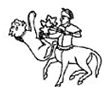 where he claims, "The figure of Lupus, which is held aloft by Centaurus, was portrayed as either a lion or wolf. It is based on the Babylonian constellation known as the Mad Dog, which was portrayed as a combination of man and lion. The relationship between the two figures is most clearly expressed in an alternative title for the Greek constellation - the 'Wild Beast' - which is a reasonably good translation of the Mad Dog's name."
Then as he stated above claims the constellation Ara as 'Mad Dog' 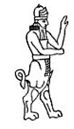 .
.
Greek Therion, the Wild Animal, or Beast, or Thera, beast of some sort, Septuagint Gen. 8:19.
- Greek Lycos, a wolf, Septuagint Gen. 49:27.
- Greek lukos, loo'-kos, perhaps akin to the base of Gr. Leukos, lyco-kos', white, thus from the whitish hair, a wolf.
Latin Victima, Hostia, Beastia, the victim, the animal, Rolleston, Vulgate Gen. 8:17.
- Latin, lupus, wolf or Victima, "The Victim," an animal or beast slain by the spear of Centaurus. Some thought that Lupus was a wineskin held by Centaurus.
Wolf.
- Hebrew ze'eb, zeh-abe', from an unused root meaning to be yellow, a wolf.
Arabic Sura, "The Lamb," or "a lamb."
- In the Koran, it is Arabic surah.
- From the Hebrew sura, meaning row, line.
- Hebrew sered, she'-red, from Heb. sarad, saw-rad', a (carpenter's) scribing-awl (for pricking or scratching measurements).
- Lupus in "The Witness of the Stars," by E.W. Bullinger, page 50 "The Egyptian name of this Lion, however, points to his ultimate triumph, for it is called Sera, that is, victory."
Egyptian/Coptic:
- Egyptian Horus, was a god of the sun, who had the head of a hawk.
- On Denderah Zodiac: sees Libra as the coming of Justice as the opposite of Aries.
- Justice.
- Hebrew tsaddiyq, tsad-deek', from Heb. tsadaq, tsaw-dak', a primary root to be right, justice, just, lawful, righteous (man).
- Greek dikaiosyne, or dikaiosune, dik-ah-yo'-o, from Gr. dikaios, dik'-ah-yos, from Gr. dike, dee'-kay, justice, thus equitable, just, thus equity, justification, righteousness.
- Some sources claim that Lupus is a child, the victim, Horus, "The Coming One," portrayed not as an animal, but as a youth, son of Osiris and the Virgin (Isis).
- From "The Alpha and the Omega" Volume II, Insert for Chapter Five page 20: "The Greco-Romans called him Harpocrates (god of silence), meaning 'justice' or the 'Victim of Justice,' 'Vindication of Majestic Law,' or the quiet submission. This has great significance and a connection with Libra as the coming of Justice as the opposite of Aries."
- Lupus in "The Alpha and the Omega" Volume II, Insert for Chapter Five page 20: "To the Egyptians and the Denderah zodiac Lupus is portrayed as a child. Revelation 13:8 '... the Lamb slain from the foundation of the world.' Even the Egyptians called it the Victim, Horus, 'The Coming One,' who was portrayed not as an animal but as a youth (see Denderah Decan 29), the son of Osiris and the Virgin. He had his finger over his mouth as if signaling silence. Horus in mythology was the ancient god of the sun, son of Osiris and Isis, represented as having the head of a hawk."
- In "The Witness of the Stars," by E.W. Bullinger, page 51 "In the ancient Zodiac of Denderah He (Lupus) is pictured as a little child with its finger on its lips, and He is called Sura, a lamb! In other pictures He has, besides, the horn of a goat on one side of His head." Lupus is (a wolf) or any animal."
- Lupus on the Denderah Zodiac is found as a Lion with his head turned backwards (beast, animal, wolf, lamb) below the Libra scales. Yes the tongue is sticking out as if thirsty or making a licking gesture.
- Lupus has his forefeet placed on an altar with the water sign on it (possibly Crux). To the Egyptians Libra is an Altar (4 stars of the box).
- In the "Gospel of the Stars," by Joseph Seiss, page 38, he claimed that Crux, "In the Zodiac of Denderah this constellation is marked by the figure of a lion, with his head turned backward, and his tongue hanging out of his mouth as if in consuming thirst."
- Lupus is a beast (a lion) so this is a misprint if he meant Crux.
Hebrew Asedah, Arabic Asedaton, both mean, "To Be Slain."
- Richard H. Allen comments in his Leo section: As a zodiacal figure it was of course entirely different from the ancient Asad of Arabia, that somewhat mythical Lion extending from Gemini over our Cancer, Leo, Virgo, Libra, and parts of other constellations, both north and south of the zodiac; but the later Arabians also adopted Ptolemy's Leo and transferred to it the Asad of the early constellation. This appeared in the various corrupted forms cited by Bayer, — Alasid, Aleser, Asis, Assid, and others similar, of which Assemani gives a long list; Schickard adding Alasado and Asedaton; and Riccioli, specially mentioning Asid and Ellesed, cautioned his readers against the erroneous Alatid and Alezet.
- Slain.
- Hebrew tsadah, tsaw-daw', a primary root to chase, by implication to desolate, destroy, hunt, lie in wait.
- One source claims that the Hebrew zabah, slain found in Psalm 137:8; also Hebrew tabach.
- Destroyed (as in Psalm 137:8, not slain refers to Babylon's demise).
- Hebrew shadad, shaw-dad', a primary root properly to be burly, i.e. (fig) powerful, (pass. impregnable), by implication to ravage, dead, destroy (-er), oppress, robber, (lay) waste.
- Springs.
- Hebrew 'ashedah, ash-ay-daw', feminine of Heb. 'eshed, eh'-shed, to pour, thus a ravine, springs.
Other names for Lupus: A'sadah, (see notes in Centaurus), A'sida, Al Fahd, Al Birdun (Centaurus), Kadb al Karm, Al Sabu' (Chilmead), Al Shamarih.
- Richard H. Allen comments: The Arabians also called it Al Asadah, the Lioness, — found by Scaliger repeated on a Turkish planisphere and cited by Bayer as Asida, — and Al Sabu’, the Wild Beast, Chilmead's Al Subahh. But the Desert astronomers seem to have mixed some of its smaller stars with a part of the Centaur as Al Shamarili, the Palm Branches, and Kadb al Karm, the Vine Branch.
- Allen claims: ... an idea for the figure said to be from the astrologers' erroneous translation of Al Fahd, the Arabian title for this constellation, their Leopard, or Panther; although Suidas, the Greek lexicographer of 970, is reported to have called it knekias, a word for the wolf found in the fables of Babrias of the century before our era. The Greeks and Romans did not specially designate these stars, and thought of them merely as a Wild Animal, the therion of Aratos, Hipparchos, and Ptolemy; the Bestia of Vitruvius; Fera of Germanicus; Quadrupes vasta of Cicero; Hostia, the Victim, of Hyginus; cited by Bayer; Bestia Centauri, by Riccioli; and Victima Centauri.
- Allen stated: Zibu, the Beast, of Euphratean cylinders, may be for this constellation;
and Urbat, the Beast of Death, or the Star of the Dead Fathers, is a title for it attributed to the Akkadians.
Caesius said that in Persia it was Bridemif, but Hyde, commenting on this from Albumasar, asserted that the word should be Birdun, the Packhorse, and was really intended for the Centaur.
On the Euphrates it probably was Kakkab Su-gub Gud-Elim, the Star Left Hand of the Horned Bull, said to have been a reference to the Centaur that was thus figured in that valley.
- Seen as the Loup of the French, Lupo with the Italians, and Wolff in Germany.
See Star names for Lupus.
This file updated on July 15, 2008, and March 30, 2010.
Return to the Table of Contents or the Zodiac of Denderah